

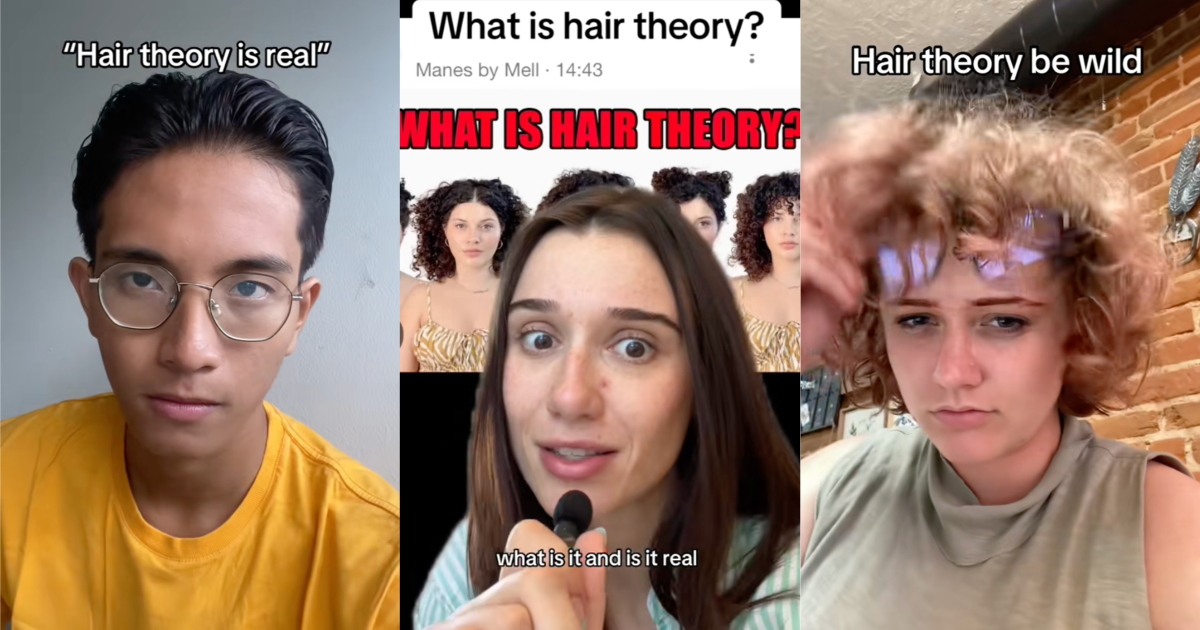
Scroll TikTok for long enough and you’ll inevitably land on “Hair Theory” — the idea that people make rapid, lasting judgements about you depending on your hairstyle. It’s being discussed as everything from a confidence reset to a social “hack”: change your parting, add a fringe, go sleeker, go curlier, go shorter — and watch how differently you’re treated. While the trend is framed as a simple glow-up experiment, it taps into something far older than TikTok: hair is one of the most visible signals we carry, and observers often read it (fairly or not) as shorthand for personality, professionalism, “approachability” and even lifestyle.
In the UK, where workplace dress codes, school hair policies and social perceptions still influence daily life, Hair Theory can feel uncomfortably plausible. But it’s also worth approaching it with nuance. Not every reaction is about “better” hair — sometimes it’s novelty, confidence, or the way you carry yourself once you’ve made a change. The useful part of the trend isn’t chasing strangers’ approval; it’s learning to choose styles that align with your identity, your routine and the settings you move through.
What TikTok means by “Hair Theory” — and why it’s catching on
Hair Theory content typically follows a simple narrative: a creator shows “before” hair (often described as less intentional, less flattering or less suited to their features) and then reveals a new cut, colour or styling approach. Comments flood in: “You look more confident,” “You look expensive,” “You look like you got your life together.” The implied argument is that hairstyle acts like a social caption: it sets expectations before you speak.
Why does it resonate? Because hair is immediate. Unlike fashion, which can be changed head-to-toe daily, hair is perceived as a more “fixed” element of you — and that can amplify its impact in first impressions. Many clients in UK salons describe wanting hair that communicates something specific: polished for a new job, softer for dating, bold for a personal reset, low-maintenance for busy caring responsibilities. That’s not vanity; it’s a practical form of self-presentation.
However, there’s a difference between recognising that appearance is socially read, and accepting the more simplistic idea that one “right” hairstyle will universally improve how people treat you. Hair texture, cultural style codes and bias also shape outcomes — and those factors are rarely acknowledged in quick trend videos.
The psychology of first impressions: what hair can signal (without medical claims)
Social psychology has long shown that people form impressions quickly and then look for evidence to confirm them — a pattern sometimes described as “thin-slicing” and confirmation bias. Hair can become part of that first slice. Even if someone doesn’t consciously think, “That bob means she’s organised,” they may still respond to cues like neatness, symmetry, shine, movement and how well a style looks maintained.
From a hairdresser’s perspective, the “signals” people tend to read are often less about a specific cut and more about intention:
- Maintenance level: Styles that look deliberately finished (even if they’re simple) can read as “put-together”.
- Silhouette and proportions: Hair that balances face shape — for example, soft framing around the cheekbones — can change how features are perceived in photos and in person.
- Texture and movement: Defined curls, a sleek blow-dry, or a purposeful wave can read as controlled and confident (even when achieved with very minimal effort once the routine is set).
- Consistency: A stable signature style can become part of your “recognisable” identity, which people often interpret as self-assurance.
It’s crucial to state the obvious: these are social interpretations, not truths. People can be brilliant and chaotic with impeccable hair, or calm and deeply competent with a messy bun. Hair Theory is really about shifting the first page of the story the world sees — not rewriting the whole book.
UK context: workplace norms, bias, and why “Hair Theory” isn’t neutral
In the UK, discussions about hair and judgement can’t be separated from real-world standards and bias. “Professional hair” is often treated as a universal concept, but historically those standards have been narrow — frequently prioritising Eurocentric textures and styles. Many people with textured hair have had to navigate assumptions about neatness, formality and suitability that don’t apply equally across hair types.
This is where Hair Theory can become tricky. A TikTok creator may claim that a sleeker style gets “better” treatment, but the underlying factor could be cultural bias rather than an objective improvement. It’s also why many stylists recommend reframing the goal: aim for hair that is healthy-looking, intentional and true to your texture, rather than chasing a singular aesthetic that doesn’t serve you.
Similarly, school and workplace grooming expectations can push people towards certain looks. If a hairstyle change is about feeling safer, more accepted, or avoiding scrutiny, that’s not the same as a fun trend experiment — it’s a social pressure. Hairporium’s stance is to treat hair choices as personal and practical, empowering readers with technique and options without implying there’s one “correct” way to look.
How to try “Hair Theory” without a drastic cut: a practical, stylist-approved experiment
If you’re curious, you don’t need to book a major chop to test the idea. A more useful approach is to run a short, structured experiment that separates the impact of hair from the impact of confidence and novelty. Here’s a simple plan you can actually do next week.
- Pick one variable: change just one element (parting, finish, or shape) so you can tell what made the difference.
- Choose a “baseline” day: wear your usual hair, take one photo in natural light, and note how you feel walking into work/social settings.
- Try a “polished” version of you: this could be a smoother blow-dry, defined curls, or a sleeker bun with refined edges (without over-tension).
- Try a “softened” version: same outfit, similar make-up, but add face-framing pieces, a looser wave, or a gentle half-up style.
- Track what changes: are people reacting to the hair, or are you standing taller because you feel good?
For most people, the biggest win isn’t external reaction — it’s discovering which styling approach feels most “like you” while still fitting your day-to-day. If your schedule is tight, build your experiment around a style that takes under 10 minutes once you’ve practised it twice.
Key Takeaways
- “Hair Theory” is a TikTok trend built on a real phenomenon: people often form quick impressions using visible cues like hair, though those impressions aren’t objective truths.
- What tends to read well isn’t one specific cut — it’s intention: a style that looks purposeful, suits your features, and fits your natural texture and lifestyle.
- In the UK, judgements about “professional” hair can reflect cultural bias and narrow standards. It’s worth prioritising authenticity over chasing a single aesthetic.
- You can test the trend without drastic changes by adjusting one variable at a time (parting, finish, or shape) and noting how you feel and how others respond.
- The most practical outcome is building a reliable styling routine you can repeat — a look that supports your confidence on ordinary days, not just on camera.
Frequently Asked Questions
Is Hair Theory “real” or just a TikTok idea?
It’s a TikTok framing of something widely observed: people do make fast judgements based on appearance, and hair is a prominent part of that. The trend oversimplifies the reasons, though—confidence, context and bias all play a role.
What hairstyle makes the best first impression?
There isn’t one universal winner. A strong first impression usually comes from hair that looks intentional and well-maintained for your texture—whether that’s defined curls, a smooth blow-dry, braids, locs, or a clean, simple updo.
Will changing my hair change how people treat me?
It can change initial reactions, especially in new environments, but it’s not guaranteed and it shouldn’t be seen as a substitute for boundaries or self-worth. Often, how you feel after a change influences how you carry yourself.
How can I look more “polished” without heat styling every day?
Many stylists suggest leaning on low-effort structure: a clean parting, a controlled finish (serum or light oil on mid-lengths and ends), a tidy updo, or curl definition techniques that last several days.
Is it damaging to keep switching hairstyles to chase a trend?
Frequent high-tension styles, repeated bleaching, or constant high heat can increase breakage risk. If you like to switch things up, consider protective, low-tension options and schedule regular trims to keep ends looking fresh.
What’s the easiest way to test Hair Theory for myself?
Change one element for one week—such as a new parting or a sleeker finish—keep everything else similar, and note both social reactions and your own confidence. That will tell you more than a single “before/after” video.
Explore More: Discover related reads from Hairporium — News • Guides • DIYs • Expert Articles.
More From the Experts: Read interviews and insights from stylists and professionals on Hairporium Expert Articles.


More in Expert insights
A personal story highlights how hair transplant consultations can become a reassurance loop. Here...
From glossy blowouts to sleek updos, “Posh polish” is back. Here’s what the trend means in hair t...
A UK-focused look at the shifting conversation on female hair loss, inspired by Aneta Mortlock’s ...
View all expert insights