Finding a wig quickly turns into a bit of a puzzle, a surprisingly difficult one! There are so many choices - the kind of hair, how the lace is done, how much hair there is (the density), and the cap itself - that you're left wondering where to even begin and very easily get lost. Something that looked straightforward swiftly descends into confusion.

Last updated by Hairporium · 24 May 2026
In this guide
Why Choosing the Right Wig Is Harder Than It LooksThe 5 Core FactorsWig Types ExplainedLace TypesChoosing the Right LaceWig DensityCap ConstructionLifestyle FitCommon Mistakes to AvoidStep-by-Step SystemBuying AdviceChoose with ConfidenceFrequently Asked QuestionsAnd getting it wrong isn't just a let-down. The wig could be uncomfortable, look obviously fake, or simply won't fit into how you live your life. That's often money down the drain, a lot of annoyance, and having to start the whole process over.
It's not actually the sheer number of options that's the problem; it's the fact that there's no obvious way to make a decision. Most of us flit between different qualities without grasping how they all relate to each other. Without a method, even a decent wig can be completely the wrong one.
If you're asking yourself how to pick a wig, it's not about being lucky or taking a shot in the dark. It's about understanding a handful of important things and how they interact.
This guide simplifies everything into five main areas to think about:
wig types (the basic build and style)
lace types (for a natural-appearing hairline)
density (how much hair is on the wig)
cap construction (how it's going to sit on your head and feel)
lifestyle fit (how it will hold up to what you do every day)
Rather than a bunch of random tips, this is a clear way to approach the problem. You'll work out what's important, what you can ignore, and how to actually end up with a wig that suits you.
By the time you're finished, you won't be stuck or unsure. You'll have a solid grasp on choosing a wig, and you'll be able to do it confidently.
Most people find wig shopping tricky not because wigs are complicated in themselves, but because they don't know what really matters. With so much to choose from, it's easy to concentrate on the unimportant details and miss what makes a wig actually good for you.
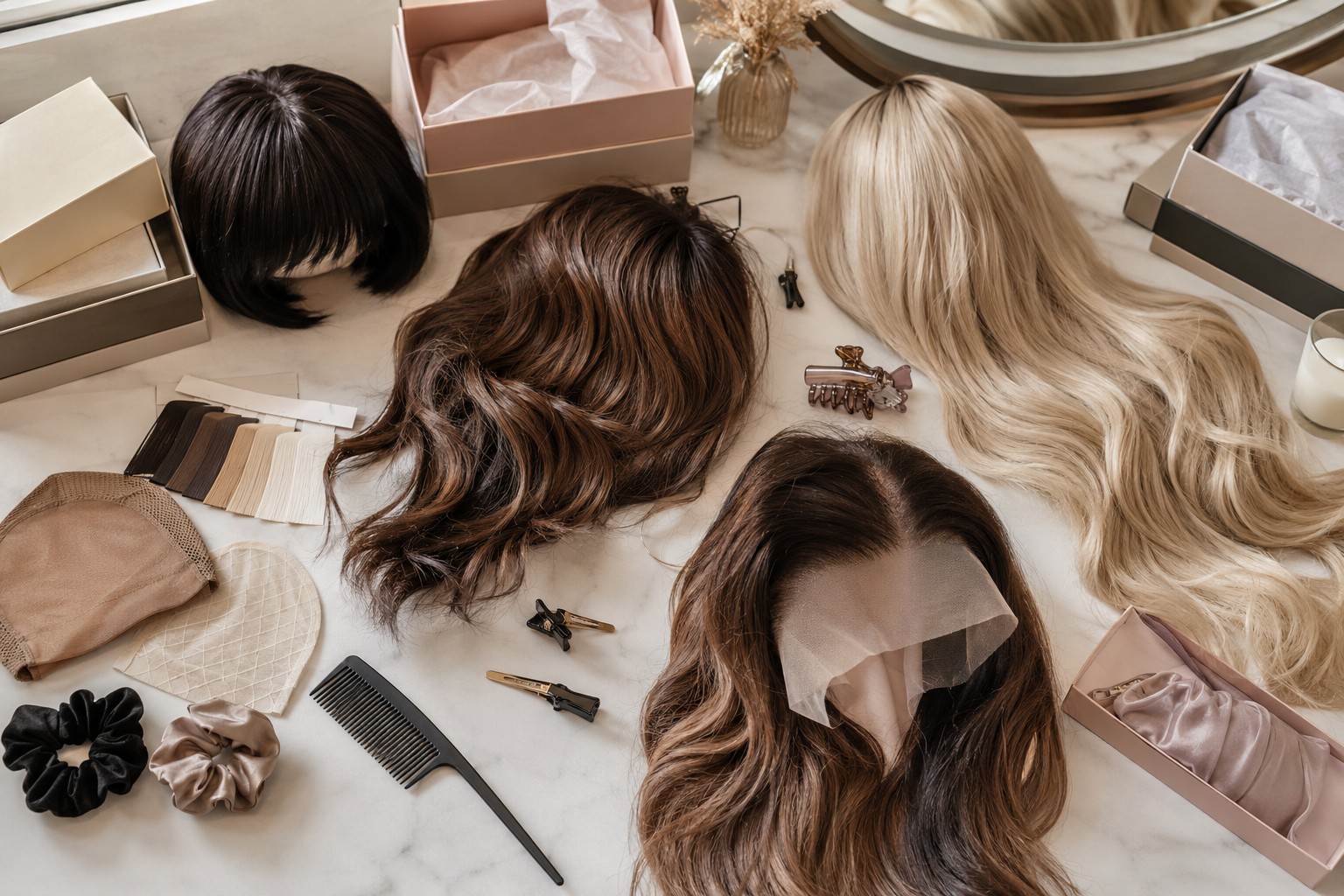
There are simply too many choices without any help. You'll encounter terms like human hair, synthetic, lace front, and full lace, but without knowing what they mean in practice, they're not very helpful and quickly become confusing.
Lots of people aren't sure about the differences between synthetic and human hair wigs, or which one is better in certain situations. It's the same with the lace - lace front, full lace, or no lace - they all have a purpose, but without help, they're just confusing labels.
And instead of helping you to decide, all these options frequently cause you to hesitate, endlessly comparing without being certain of anything. The issue isn't the variety; it's being unable to narrow it down to what you need.
It's only natural to pick a wig based on how it looks. You see a style online, and it's perfect. But what looks good in a picture doesn't always translate to the real world.
A wig might look thick, sleek, and perfectly styled in photos, but when you actually have it on, the fit, the weight, or the feel could be totally different. And if it's uncomfortable, you won't wear it very often, however good it looks.
How it fits is vital. If the wig doesn't sit correctly or feels too tight or too loose, it impacts both how comfy it is and how it looks. A wig that fits properly will always look more realistic than one that's visually appealing but feels off.
And another thing people often forget is how they'll actually use the wig in their day-to-day life. Heat, dampness, and how active you are all affect the way a wig behaves.
For instance, some wigs don't respond well to sweat or heat, whereas others need regular styling to keep their shape. If you're always on the go, traveling or working for long hours, a wig that needs a lot of attention will quickly become irritating.
How much upkeep is involved is often underestimated. Some wigs need frequent looking after, styling, or adjustments to remain in good condition. If that doesn't fit in with your routine, the wig won't stay practical for long. When a wig is suitable for your lifestyle, it's easy to wear. When it's not, you'll find yourself avoiding it.
Every decision about a wig should be considered through a few key things. When you look at all of them together, choosing becomes much easier and more sensible. Rather than guessing or focusing on just one aspect, these things give you a complete way of deciding what will really suit you.

Wig type: This is where to start. It determines the overall construction, whether it's synthetic or human hair, and how much you can style it. The type you choose affects how natural it looks and how much effort it needs to keep looking good.
Lace type: Lace is what creates a natural-looking hairline and scalp. Different lace types vary in how noticeable they are, how well they blend with your skin, and how simple they are to use. Getting the lace right makes a huge difference to how real it looks.
Density: Density controls how thick or full the wig appears. Too much density can look heavy or unnatural, while too little can look thin. The right amount depends on the style you're aiming for.
Cap construction: This affects how the wig sits and feels on your head. Some caps are more breathable, some are more secure. A good fit makes it both more comfortable and looks better.
Lifestyle: This is what brings it all together. Your everyday routine, the climate, and how active you are will decide what sort of wig you can actually wear and maintain.
These five areas all influence each other. When you think about all of them, you stop guessing and start choosing with certainty.
First things first, get a handle on the kinds of wigs there are. They're constructed differently, feel different on your head, and fit into different lifestyles. Knowing what each offers will make deciding what's right for you a lot simpler.

Most people first decide between human hair and synthetic. Both are useful, but for different purposes.

Human hair wigs are famous for looking and feeling just like your own hair. They flow naturally, integrate with your skin tone beautifully, and you can use heated styling tools on them. You can straighten, curl, or completely reshape them – just like you would your own hair. That adaptability is a plus if you like to change your look frequently. They do usually cost more, and need consistent care to stay looking good, though.
Synthetic wigs, in contrast, are kinder to your wallet and much easier to look after. They're already styled and will keep their shape even after you wash them; a good choice if you don't want to spend ages on styling every day. The problem is they aren't as flexible: most can't withstand heat, and once the style is done, it's tricky to alter.
The choice between them is all about finding a balance. Go for human hair if you want something realistic with total styling control, but if convenience and a lower price are your priorities, a synthetic wig is often the sensible answer.
Lace front wigs are incredibly popular because of the unbelievably natural hairline they create. The hair at the front of the wig is attached to a lace base that blends with your skin, making it appear as though the hair is growing directly from your scalp.
This makes them perfect for styles where your hairline is on show. But, you're usually restricted to parting your hair in the front area; you can't just move the parting anywhere on your head.
They're a nice compromise between a natural look and how easy they are to manage, making them a very common pick for everyday use.
Full lace wigs are made entirely from lace, meaning you can part your hair in any direction you like. Total styling freedom! You can wear it up, down, in braids, whatever you fancy, without the wig's base being visible.
Because of this flexibility, they generally look the most natural of all. However, they're pricier and often need more expertise to put on correctly.
If you crave the most styling options and are confident with a more involved process, they're a great choice.
360 lace wigs are a mix of lace front and full lace wigs. They have lace around the entire hairline, but the middle section is typically a different material.
With this design, you can put your hair in a ponytail or a bun while keeping a natural-looking hairline. They are also cheaper than full lace wigs.
They're a good middle ground between price and versatility, perfect if you want more styling options without going for a full lace wig.
U-part and V-part wigs are designed to merge with your own hair. You leave some of your hair out and blend it with the wig for a more natural effect.
These are often simpler to wear because they don't depend on a lot of lace or glue. They're also pretty good for beginners, as the blending is easier to do.
They work best when your natural hair is a similar texture to the wig. If blended properly, they can look very natural and are still reasonably easy to deal with.
Headband wigs are among the easiest to use. Instead of lace, they come with a headband already attached to hold the wig in place.
No glue, no cutting the lace, no complicated fitting. You just put it on and adjust the band. They're perfect if you're just starting with wigs, or if you want something fast and unfussy.
They won't look quite as real at the front edge (the hairline) as a lace wig, but are brilliantly practical for everyday wearing and don't need much doing to them.
Machine-made wigs are generally the cheapest, and are made by sewing hair into strips on a wig cap, which makes them strong and easy to find.
However, they aren't usually as naturally looking as those with a lace front, and this is particularly noticeable at the hairline, and your styling choices might be a bit restricted.
They're a great place to start if you're on a tight budget or simply trying wigs out, but they won't necessarily give you the most lifelike effect.
What truly makes a wig seem like it's you is the lace. It's the bit that goes at the front, or all over the wig, and blends with your skin, so the hair appears to be growing from your own scalp. The kind of lace you pick really changes how real the wig looks.

Transparent lace is the most common type. It mixes in fairly well with fairer skin, and you can use makeup to get a better match. It's a little thicker than HD lace, and because of that, it is tougher and easier to deal with, especially if you're a beginner.
HD lace is much, much finer. It disappears into the skin more readily, creating a very natural look, especially around the hairline; it's almost invisible when applied correctly. It is more fragile and needs a gentler touch, and typically costs more.
The decision really comes down to how realistic you want it to be versus how easy it is to live with. HD lace gives a more flawless finish, but transparent lace is more robust and easier to use.
Swiss lace is soft and very light, and because of this, it blends with skin more naturally. Being thinner, it creates a smoother look and feels more pleasant to wear. Unfortunately, it isn't as long-lasting and can rip if you're not careful.
French lace is thicker and much more durable. It will last longer and can withstand being worn regularly, making it a sensible pick for daily wear. However, it's a bit more obvious than Swiss lace.
For a softer, more natural feel, Swiss lace is a good bet. If you need something that will hold up to lots of wear, French lace is generally a better choice.
A “pre-plucked” hairline is where the wig has already been tweaked to look more like a genuine head of hair. The hairs at the front are a little sparser - mimicking the natural way hair grows, and not a harsh, solid edge.
Then there are 'baby hairs' - those incredibly fine little hairs right at the front - and they add a lot of detail, softening the hairline to prevent it from looking unnaturally perfect.
Because of both of these features, you have less to do to the wig when it arrives. Without them, you might have to thin the hairline yourself, and that can be difficult if you are new to wigs. These details really change how realistic the overall wig appears.
The Hairporium AI Stylist considers your face shape, hair type, lifestyle and budget to recommend the right wig for you. Free, no account needed.
Get my wig recommendation →
The kind of lace you choose will depend on your skin tone and how confident you are at working with wigs. If you're just beginning, it's generally best to pick a lace that isn't too difficult to handle and won't punish every little error.
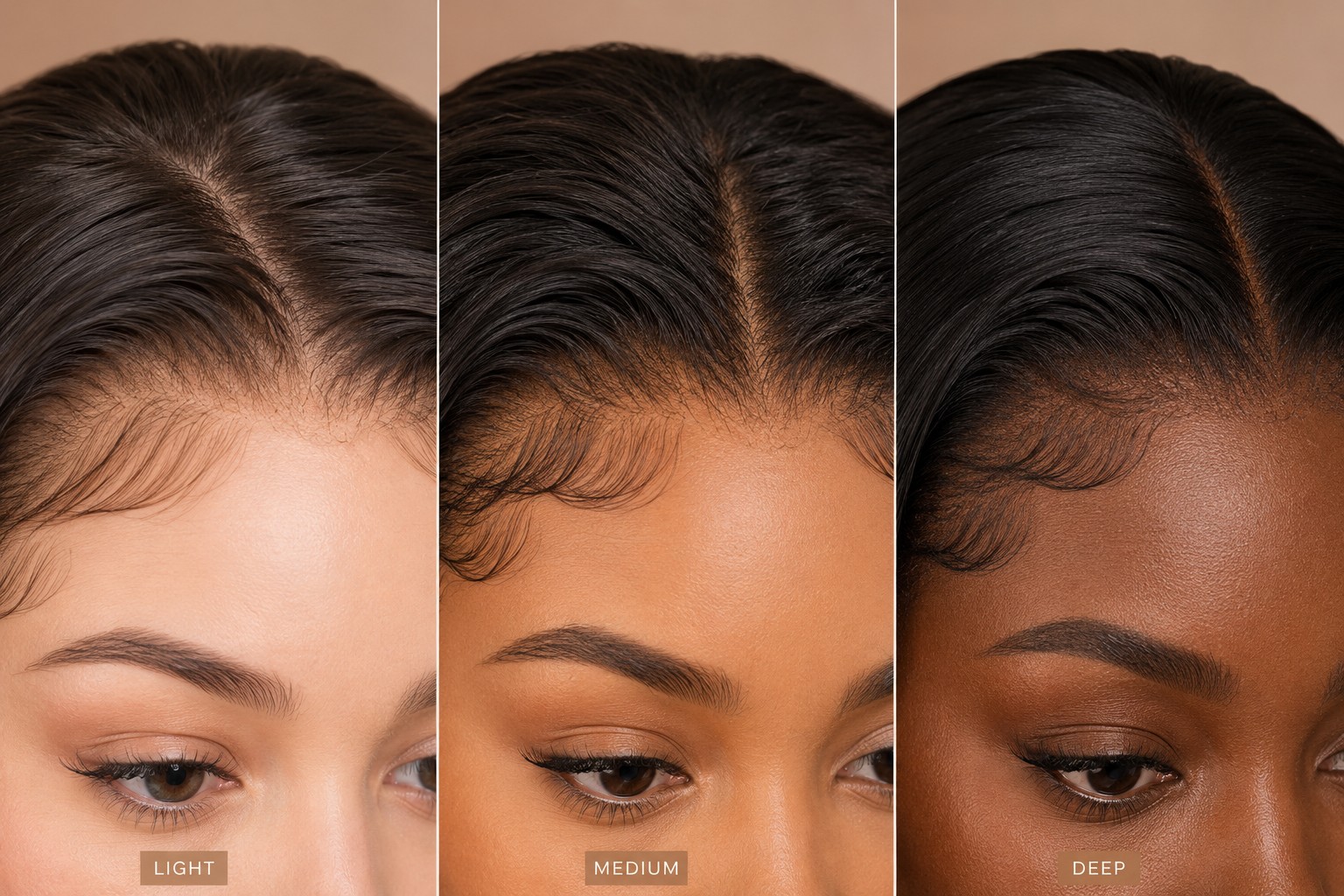
For the wig to look natural, the lace must match your skin color. Some laces require you to blend or tint them to get the shade just right, while others are made to adapt more readily.
If you're looking for something simple that won't fall apart, choose a lace that doesn't require a lot of adjustment. If you're more skilled or are striving for a completely invisible effect, you can go for a beautifully blended lace, but it will need a little more care.
Ultimately, it's about finding the sweet spot between realism and ease of wear.
How much hair a wig has (its density) is a huge factor in how believable it is, or how obviously fake. Density is usually given as a percentage, and 130%, 150%, and 180% are the most common.
130% gives a light and pretty natural look, very close to the amount of hair most people have, and perfect for everyday styles.
150% is a little more, a popular choice that gives a lovely fullness with lots of volume, but doesn't become overly heavy.
180% is considerably thicker, making a much bolder statement and typically chosen for very styled looks or when you need serious volume.

So, how full you want your hair to be is what should decide the density.
Your face shape and the hairstyle you've chosen both affect what density will work best. A denser wig can add volume and make an impact, but too much can overwhelm your face.
Lighter densities are usually more flattering for a natural look that you'd wear every day, and a more striking or elaborate style can carry a higher density.
Long wigs usually look best with a medium density to avoid being too heavy, and shorter cuts can manage a bit more fullness without looking over the top.
The aim is for balance – the wig should complement your look, not dominate it.
Many people new to wigs make the mistake of choosing too much thickness. Though volume sounds good, too much density can look fake and be a real hassle.
Conversely, too little density can make a wig look flat and shapeless, and that will affect the style.
Lots of people believe more hair is always better, but that isn't necessarily the case. A natural look usually comes from a balance, not just maximizing fullness. Starting with a moderate density is usually the safest option.
Now, if a wig isn't comfy, you won't wear it, no matter how good it looks! How the wig is constructed - its "cap construction" - determines how it sits on your head, how securely it feels, and how much air can get to your scalp.
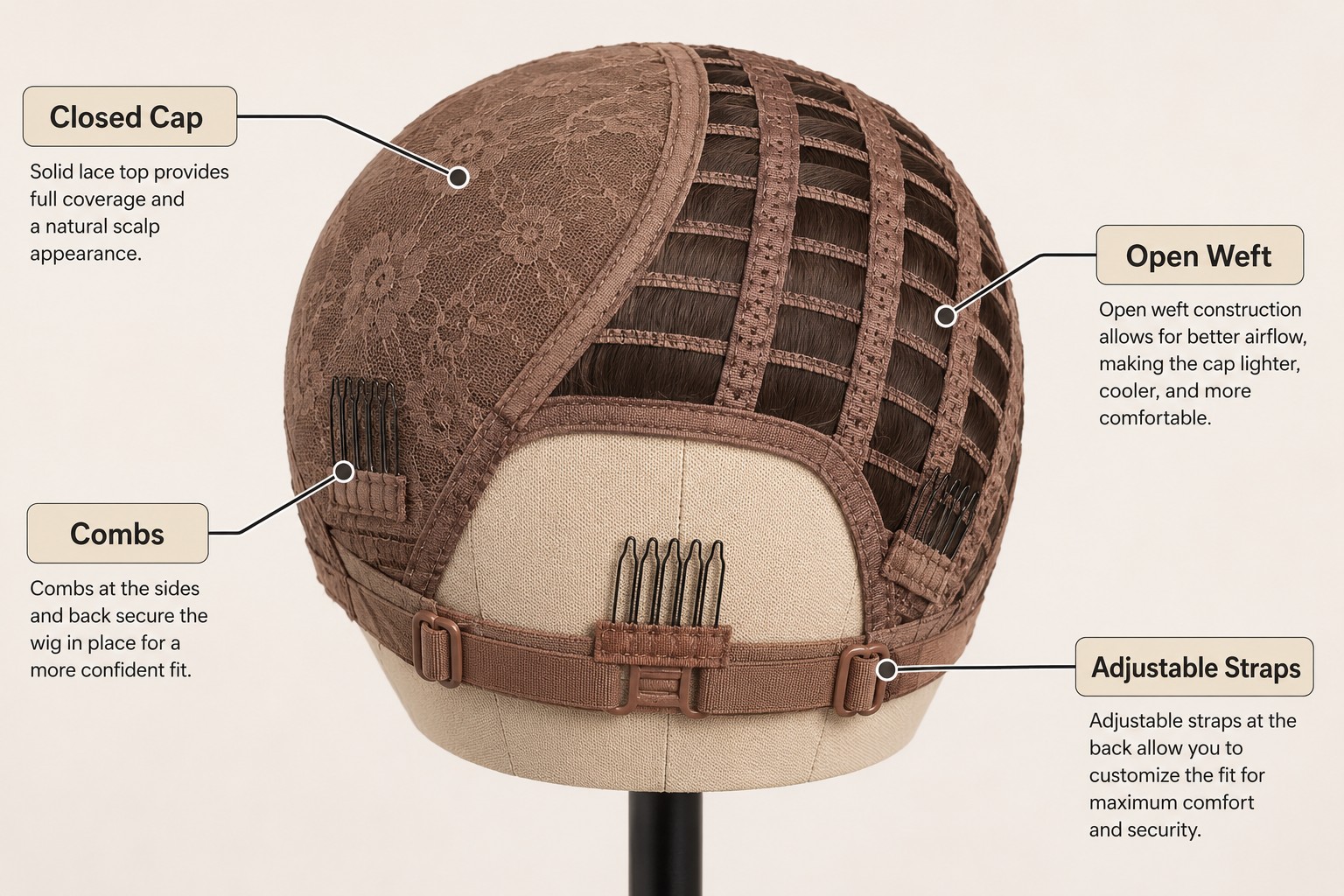
There are basic cap types. Closed caps have a solid base, which helps the wig hold its shape, and they tend to feel very secure, though perhaps a bit less breathable.
Open weft caps use sewn-in rows of hair with gaps between them. These gaps let your scalp breathe better, making them more comfortable for wearing for a long time, particularly when it's warm.
Closed caps give you shape, open weft caps give you comfort and air flow.
"Glueless" wigs are designed to stay on without needing glue. They typically have adjustable straps and combs to hold them in place and are brilliant for beginners as they are simple to put on and take off, and you don't have to mess with glue or a complicated application.
They're also more convenient for everyday wear if you want to get going quickly.
Most wigs do have adjustable straps at the back to tighten or loosen the fit to your head size. Plus, combs inside grip onto your own hair for added security.
These two things working together keep the wig in place all day. A well-fitting wig should feel secure without being too tight.
Getting the size right is important for comfort - too tight is uncomfortable, too loose and it'll slide around.
Measuring your head, around your hairline, and across your head, before buying, will help you get the correct size. A good fit improves both how it feels and how it looks.
A wig should fit into your life, not make it harder. The right one makes daily wear easier, not add to your to-do list. If you're wearing it every day, comfort and how well it will last become crucial. Lightweight and breathable fabrics are best for all-day wear.

For just occasionally, you can choose more elaborate styles that require a little more effort because you aren't wearing them as often.
The weather matters. In hot, humid weather, breathable caps and lighter densities will feel much better. Heavy wigs can get too warm, and some materials respond to heat and moisture in different ways. Picking a wig suited to your climate makes wearing it daily much easier.
And your activity level? If you're on the go, travel a lot, or are generally active, you need a wig that stays put and doesn't need constant adjusting.
Simpler styles are often better for active lifestyles - easier to manage and less likely to move. A wig that fits with how you live will always be the most sensible.
If you're starting out keep things uncomplicated. Getting the right wig to start with will make things so much easier and much more pleasant to wear.
For first-timers, glueless wigs, headband wigs, and basic lace fronts are usually the easiest to manage; they aren't as demanding with how they're put on and are a lot more forgiving.
They're a great way to get used to having a wig on your head without a ton of fiddling.
Avoid, at first, full lace wigs or those that are very thick – they're often trickier and need more know-how and effort.
Building your confidence with something simpler is a good idea before you go for anything more complicated.
And beginner wigs should be easy to put on, easy to look after, and shouldn't need constant adjusting.
Once you are comfortable, you can start looking at more detailed styles.
A lot of people make the same mistakes when they choose a wig, and knowing what to sidestep will make the whole process much smoother.
Don't just pick a wig because it looks good in the picture! Something lovely online might not actually suit you or be comfortable.
Photos show the style, but often don't show how it fits, how heavy it is, the quality of the lace, or how it feels after you've had it on for hours.
And if a wig isn't comfortable, you won't wear it, however fantastic it looks.
Comfort is more important than style - a wig that's too tight, too heavy, itchy, or feels insecure will quickly become a pain.
Too much or too little hair (density) can make a wig look unrealistic. Too thick and it'll be bulky and obviously a wig, too thin and it won't have enough shape or cover everything.
Choosing the wrong lace is another problem; if the lace doesn't match your skin tone or is too obvious, the hairline won't blend in naturally. Don't overcomplicate your first purchase; starting with something complicated usually ends in frustration.
If you're new to wigs, a simple, comfortable, and easy-to-wear one is best to begin with, before moving on to more advanced designs.
In-depth guides for every wig decision — by type, face shape and lifestyle.
Instead of just guessing, use a system to choose a wig that will actually work for you. This makes things much simpler and helps you decide what you want.
First: decide on the wig type. Do you want synthetic or human hair? Human hair offers more styling options and a more natural feel. Synthetic is cheaper and easier to maintain.
Second: choose the lace. Pick a lace that matches your skin tone and how much experience you have. Those new to wigs might want a lace that's easier to blend; more experienced people can go for finer lace for a more invisible look.
Third: select the density. Choose a fullness that looks natural and balanced. For everyday wear, a moderate density is often best as it gives volume without being too much.
Fourth: check the cap construction. Make sure it fits well and is comfortable. Look for a breathable cap, adjustable straps, and clips to hold it in place without being too tight.
Fifth: match it to your lifestyle. What will you be doing while wearing it? Comfort and being easy to care for are most important for all-day wear. If it's for a special occasion, you could go for something more detailed.
And sixth: start simple, then upgrade later. A simple wig will help you work out what you like, what feels good, and what suits you before you spend more on something more complex.
A few quick checks will save you money and bother.
Shopping online offers a wider selection, while in a shop you can try it on, check the comfort, and the color. If you are buying online, check the returns policy first.
Look at photos and reviews from customers - they'll give you a much better idea of what the wig is like outside of the perfect images used for advertising. Reviews will also tell you about comfort, how much it sheds, the lace quality, and if the wig actually looks like the pictures.
And plan your budget based on what you need and how often you'll use it. A wig you'll wear every day might be worth spending more on, but one for occasional use can be simpler and cheaper.
Ultimately, choosing a wig isn't a gamble. It's about understanding what works for you and why. When you consider the wig type, the lace, the density, how the cap is made, and how you live your life, it becomes a lot clearer.
Instead of feeling overwhelmed, you'll start to choose things that suit your life and are comfortable. That's how you'll confidently learn to pick a wig.
Don't rush, keep it simple to begin with, and focus on how it feels. A good wig doesn't just look natural, it fits into your everyday life.

Look at five things together: the wig type, lace type, density, cap construction, and your lifestyle. When you balance all five rather than focusing on one, the right choice becomes clear instead of a guess.
Choose human hair for the most realistic look and full styling control — you can heat-style it like your own. Choose synthetic if you want lower cost, easier maintenance, and a style that holds even after washing.
Lace front has lace only at the hairline — natural front, restricted parting. Full lace is lace throughout, giving total parting freedom and the most natural look but pricier. 360 lace wraps the entire perimeter, letting you wear ponytails while keeping a natural hairline at a lower cost than full lace.
130% gives a light, everyday natural look matching most people's natural hair. 150% adds fuller volume without being heavy — the most popular choice. 180% is bold and dramatic, suited to styled looks rather than everyday wear.
Glueless wigs, headband wigs, and basic lace fronts are the easiest to start with — they don't need glue or complicated fitting. Avoid full lace or very high-density wigs at first; they need more skill and patience.
Continue exploring the other Hairporium guides covering hairstyle decisions, extensions, maintenance, lifestyle, hair problems, and our decision engine.
What Hairstyle Suits Me?Hair Extensions GuideHair Maintenance GuideLifestyle Hair GuideHair Problems GuideHair Decision EngineThe Hairporium AI Stylist analyses your face shape, lifestyle and budget to recommend the right wig for you. Free, no account needed.
✓ Matches wig type to your face shape and lifestyle
✓ Personalised recommendation in under 2 minutes
✓ 100% free — no account, no sign-up required
Start your free hair consultation →