So many hair care instructions are just lists of things to do, yet even good suggestions won't help if you can't actually follow them. The trick to hair that stays looking good isn't trying to keep up with every new trend, but having a routine that suits your hair type and how you live.
Last updated by Hairporium · 23 May 2026

In this guide
Why Most Routines FailUnderstanding Your HairDaily Hair Care RoutineWeekly Hair Care RoutineWashing StrategyWig CareExtension CareClimate & Lifestyle ImpactRealistic ExpectationsCommon MistakesBuilding Your Personal PlanMaintaining ConsistencyWrap UpFrequently Asked QuestionsSo many hair care instructions are just lists of things to do, yet even good suggestions won't help if you can't actually follow them. The trick to hair that stays looking good isn't trying to keep up with every new trend, but having a routine that suits your hair type and how you live.
Instead of pushing you to do a lot, it’s about finding ways to look after your hair that last and are easy to keep doing. This guide is here to help you create your own ‘system’, a sensible routine for every day, every week, and a long term hair care that suits you, your hair, and how you live. Whether it's your own hair, a wig, or extensions, the idea is to take the muddle out of hair care and replace it with a routine you can actually keep going - because that's where the real difference is, in consistency. The aim isn’t flawless hair; it’s effective hair care.
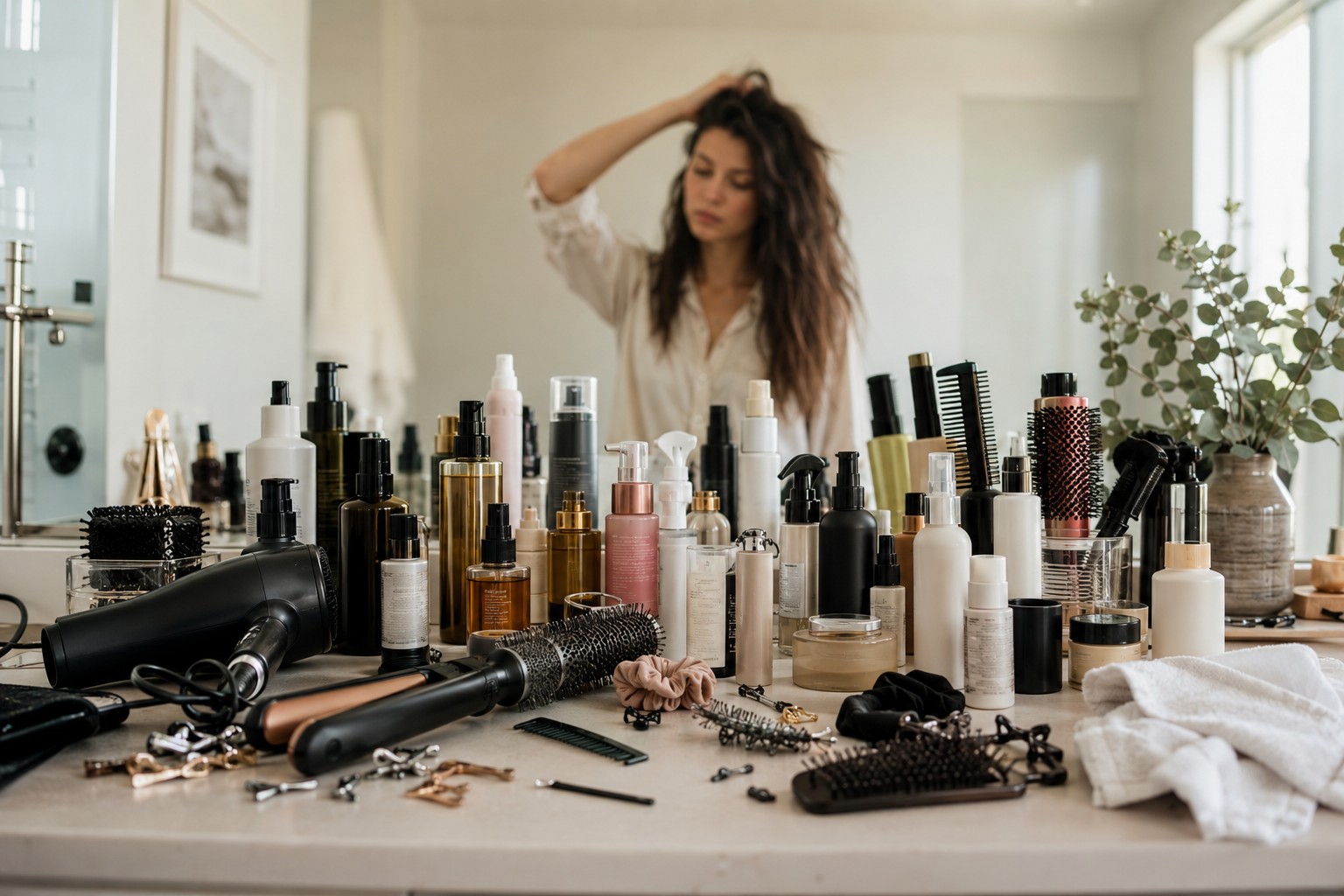
Most hair routines don't work, not because they're fundamentally flawed, but because they aren't made for life. Hair care falls apart when it doesn't consider doing things regularly, the environment around you, and how much effort you're actually able to put in. What looks amazing on paper often collapses when you try to do it day after day.
Routines that are overly complicated are a huge problem. You start with a simple aim - healthier, more manageable hair - and rapidly find yourself doing loads of steps that are hard to keep up with. When your routine includes far too many products, treatments, and ways of styling, you'll find it hard to be consistent.
A lot of product use is a major issue; using numerous shampoos, conditioners, serums, and treatments without a clear reason just causes more confusion than improvement. Rather than fixing issues, they often create new ones, like a product building up or your hair becoming unbalanced.
And unrealistic expectations only make things worse. A routine that needs lots of time, effort, and being exact every single day won't last. You might manage it for a week, but it will inevitably fall apart, and when it does, your hair care becomes irregular, and your results vanish just as quickly.
How your hair is structured is important; hair behaves differently depending on this. Straight, wavy, curly, and tightly coiled hair all react to products and routines in different ways. If routines don't take this into account, you won't get consistent results. Hair’s thickness and how porous it is are also factors.
Dense hair will likely need more moisture and detangling, while fine hair can be easily weighed down. Hair with high porosity soaks up products quickly, but loses moisture equally fast. These differences affect how often you wash, condition, and style.
One routine simply won't suit everyone. Blindly following general advice without adjusting it to your hair type leads to incorrect care. This results in either hair that hasn't had enough maintenance, or hair that’s been overdone, and neither of these leads to lasting results.
Even the very best routine will fail if it doesn't fit into how you actually live. A hectic schedule means it’s hard to consistently do routines that take a long time. If caring for your hair requires more effort than you realistically have, it's going to become patchy.
And inconsistent routines give you inconsistent results. Missing steps, delaying washing, or rushing your hair care will affect how your hair looks and feels over time. This lack of a rhythm stops any routine from working effectively. Hair care can also become exhausting. When a routine feels like a chore, you lose motivation. You’ll either simplify randomly or just stop following the routine completely.
A routine only works when it fits with your time, your energy levels, and the climate. Without this, even the most cleverly designed plan won't work in reality.
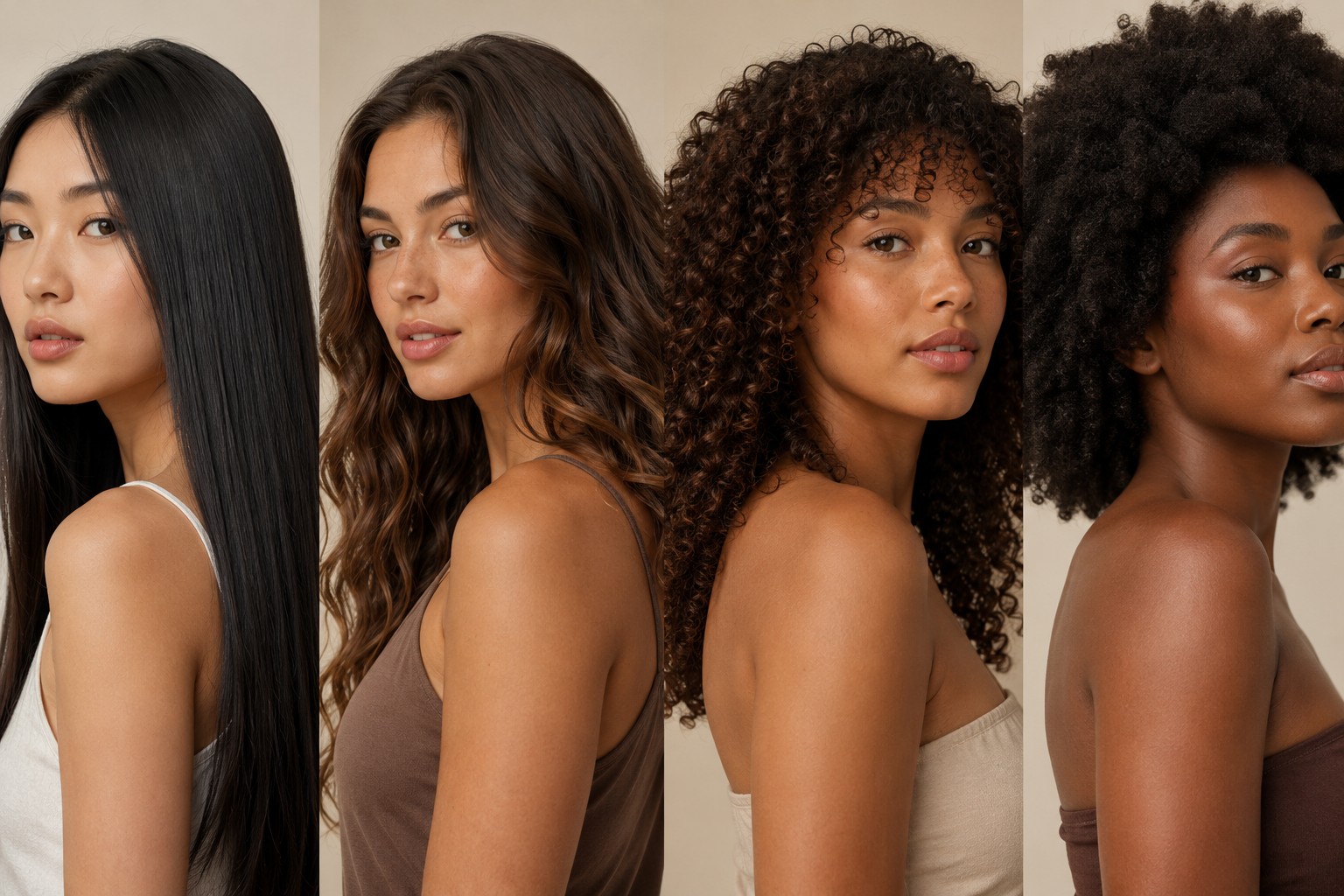
The crucial first step is understanding your hair before you start looking after it. Maintenance only works when it's matched to how your hair behaves. Without knowing your hair’s natural tendencies, every routine is a shot in the dark. What works for your friend won't necessarily work for you because your hair will respond to products, styling, and the weather in a different way.
Hair type and texture define how your hair acts day to day. Straight, wavy, curly, and coiled hair all have different needs when it comes to moisture, styling, and maintenance. Straight hair naturally distributes oils easily, which can make it look greasy quickly, but also keeps it in good condition. Curly and coiled hair, however, finds it difficult to keep moisture because the oils don't move down the hair strand as easily. How your hair feels is hugely important to how it will look when you style it.
Something that easily holds a curl in a mass of spirals might just fall flat and lifeless on poker-straight hair. And those strong-hold products for thick, abundant curls? They can unfortunately flatten out finer hair. Knowing what kind of hair you have is the key to working with its natural tendencies, rather than battling against them.
Let's talk about density and thickness: Density is how much hair you've got, and thickness is about how wide each individual strand is. Both of these things change how your hair looks and how it responds to what you do with it.
Hair that's very dense usually looks fuller, and you'll likely need more product to get everything covered. It will also take noticeably longer to wash, dry, and actually style. Hair that's low density, on the other hand, can get weighed down and look flat, or get a lot of product stuck in it, far too easily.
Thickness changes how much the hair absorbs. Thicker, coarser strands can handle heavier products and hold onto moisture for longer, while finer strands do best with lighter options that won't drag them down. These differences dictate how often you condition, how much product you use, and what kind of styling is going to work.
Your hair's current condition is a record of everything it's been through. Things like heat styling, chemical treatments, color, and just being exposed to the elements all affect how strong it is and how it behaves.
Hair that's damaged generally needs a lot more looking after, including products specifically for repair and avoiding heat as much as possible. Hair that's been chemically treated or coloured will probably want a boost of hydration and protection to stay healthy. Hair that hasn't been treated, or 'virgin' hair, usually just needs a simpler routine.
The more your hair has been put through, the more you need to really focus your care. And if you ignore its past, you'll either not be doing enough to help it, or you'll be doing too much and causing even more damage.
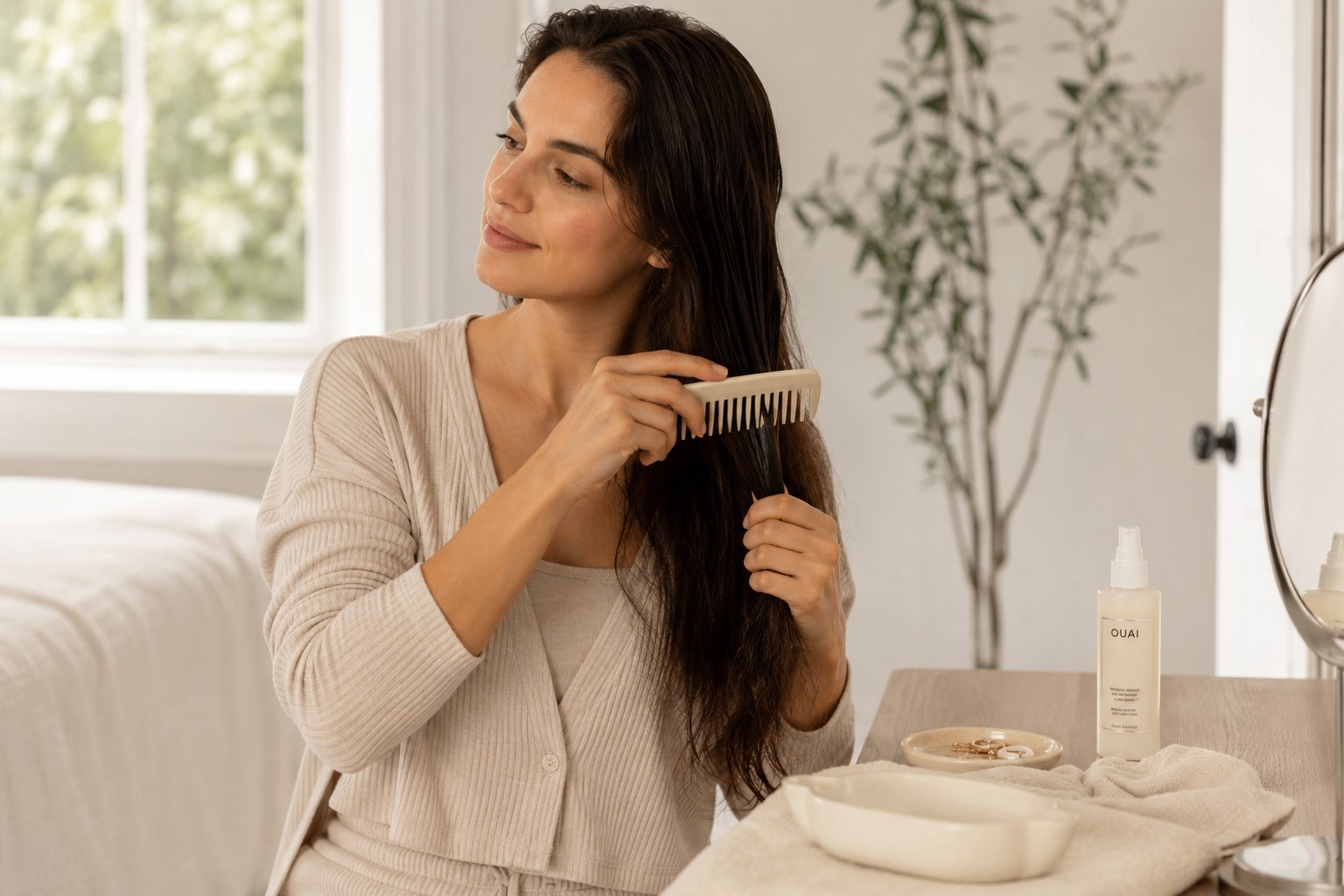
A daily hair care routine that actually works should be easy to do, something you'll actually repeat, and something that's actually possible to fit into your life. It’s not about getting it absolutely perfect; it’s about doing it regularly. A routine you can maintain will always be better than one that looks amazing in theory but falls apart after a few days.
In the morning, your hair care sets the tone for the whole day. Concentrate on keeping it under control, not on completely restyling it.
Gently work through any tangles. Use a wide-tooth comb or your fingers (depending on your hair type) and start at the ends, working your way up. This avoids unnecessary pulling and breakage. For curly or textured hair, a little bit of a light leave-in conditioner while detangling can make it easier to manage without making it heavy.
Just a little bit of styling is all you need. You don't need to start from scratch every morning. Just tweak what you’ve got, reshape bits, smooth down flyaways, and add a tiny bit of product if you need to. Overdoing it leads to a build-up and makes your hair less flexible later.
And when it comes to frizz, deal with it where it is; don't go overboard. A small amount of serum, cream, or oil (again, depending on your hair) should do the trick. The idea is to calm the surface issues without making your hair heavy or greasy.
Most of the damage happens during the day, not during styling. Throughout the day, friction, heat, and the weather slowly weaken your hair if you’re not careful.
Try to avoid heat whenever you can. If you're going to be in the sun for a long time, think about a protective style or covering your hair. And it’s not just styling tools that create heat; the sun affects moisture levels too.
Friction is something people often forget. Constantly rubbing against rough materials, touching your hair a lot or using tight hairbands can cause breakage over time. Keeping it safely secured in a loose style will lower that risk.
Keeping oil and sweat under control is important, especially if you're active. Rather than washing it too often, try simple things like loosening your style, refreshing your scalp or using light products that won't clog or build up quickly.
How you care for your hair at night is everything – it’s where all your effort either pays off or falls apart, and it really shows in how it looks the next day. Keeping your hair safely contained is key to stopping tangles and strain on each strand. You can do this with loose braids, wrapping it up, or tying it so it keeps its shape without being pulled tight.
And of course, the best method depends on your hair's type and how it's styled. Don't forget your pillowcase – a rough one causes frizz and breakage, while a smoother fabric helps your hair stay hydrated and prevents damage while you sleep. At night, you're not doing a style, you're protecting the style you already have. A simple routine you do every night will keep your hair easy to manage and mean you don't have to do so much with it in the morning.
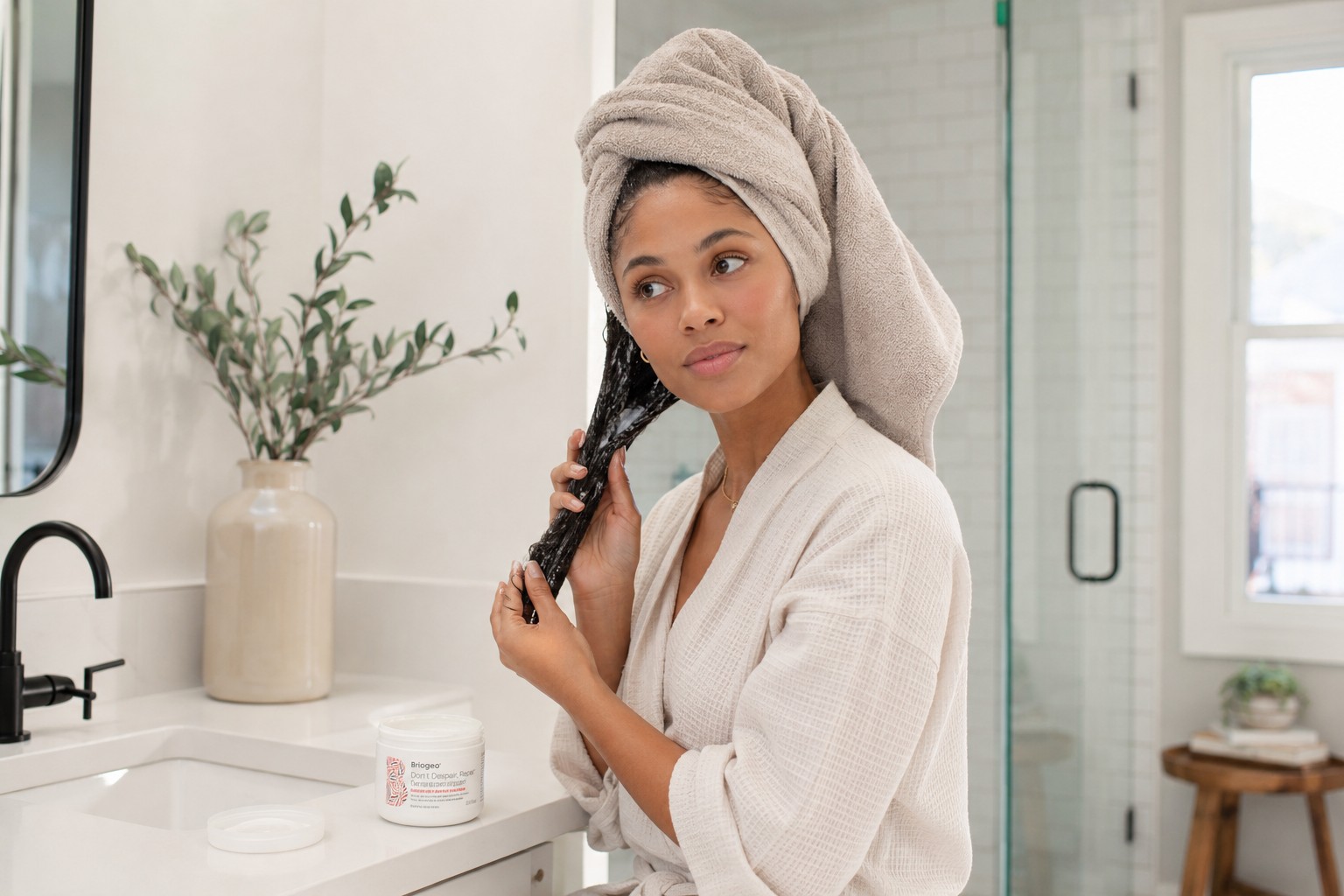
Your weekly hair care is a total refresh. It gets rid of buildup, brings things back into balance, and stops problems from becoming permanent. Your daily routine keeps things under control, but your weekly routine tackles what’s accumulated over seven days. Without this reset, even the best daily habits will start to become less effective.
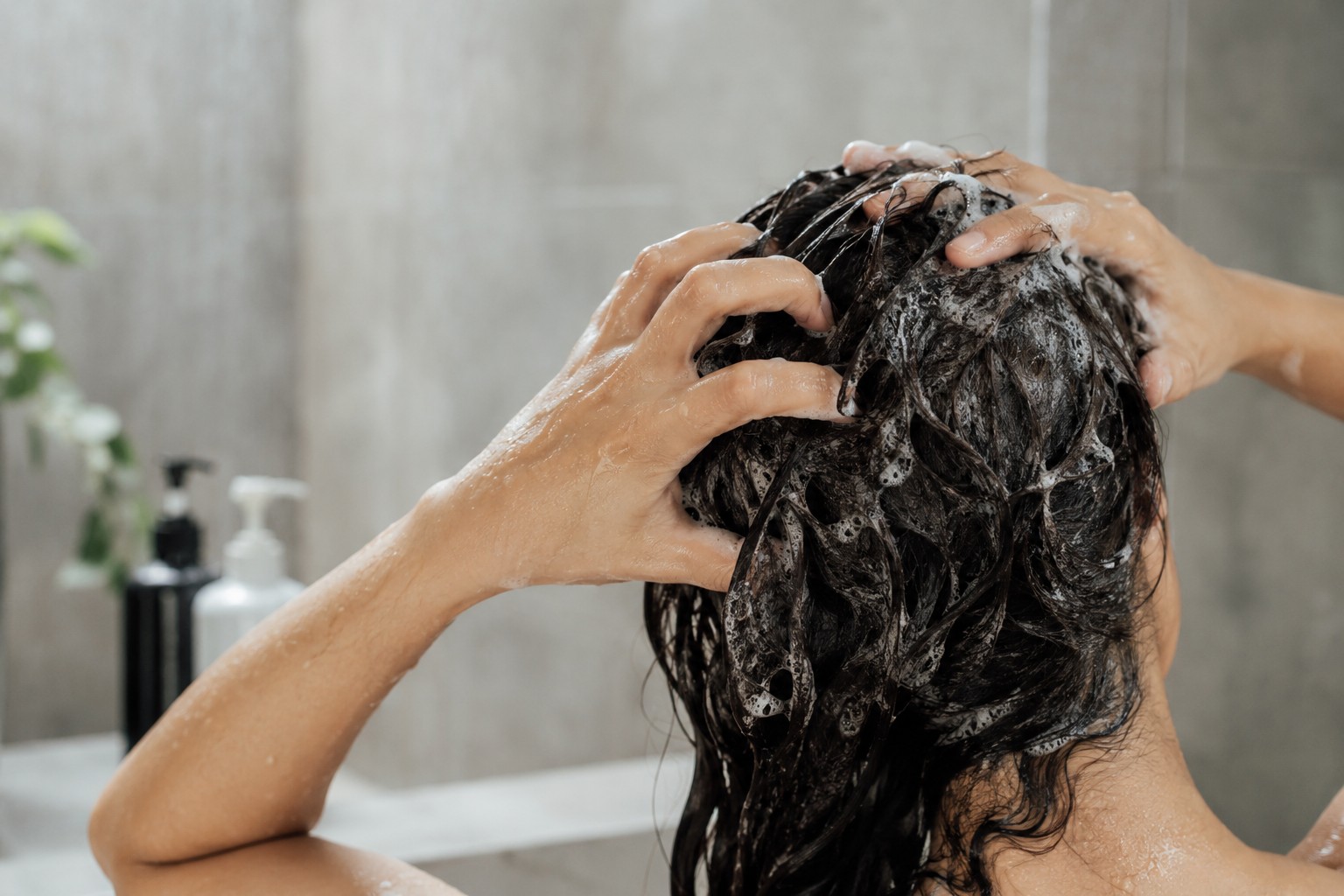
When it comes to washing, it's not about a schedule; it's about when your hair needs it. How often you wash should be based on what your hair is doing, not a particular day. Oiliier, finer hair will probably need washing more often to stop buildup, while drier, coarser hair will do better if you wash it less often, so it can hold onto moisture.
Washing too much strips your hair of its natural oils and makes it dry. Not washing enough lets product, oil, and dirt from the air build up on your scalp and affect how your hair is doing. Finding the right balance relies on your hair type, how active you are, and where you live.
And the shampoo you choose is as important as how often you wash. A clarifying shampoo is good for getting rid of buildup, but don't use it too often, especially if your hair is dry or damaged.
Regular shampoo should suit your hair’s needs: something moisturizing for dry hair, a light cleanser for fine hair, and something to balance things out if you have a mix of issues. You want to get your hair clean without messing up its natural state.
And after washing, conditioning puts back what the shampoo took away, keeping it soft, manageable, and healthy. What your hair needs is the important thing - does it need more moisture or more strength?
Conditioners that add moisture are great for dry or textured hair to keep it hydrated and stop frizz. Protein treatments strengthen hair that feels weak or is damaged from treatments. Too much of either one can throw things off – too much moisture makes hair limp, too much protein makes it stiff.
A deep conditioning treatment is a bigger reset within your weekly routine. It's a more intense treatment that gets deeper into the hair than a normal conditioner.
How often you do it depends on your hair’s condition – damaged or chemically treated hair might need it more often, while healthy hair can go longer between them. It's about balance, and not overdoing things.
Healthy hair begins with a healthy scalp. If you ignore your scalp, you'll have problems with growth, texture, and how your hair looks. Oil building up is really common. Your natural oils, products, and stuff from the air can block the little openings your hair grows from, and that affects hair quality over time. Washing regularly stops this, but specific scalp care can improve things even more.
Gently exfoliating your scalp or using treatments designed for the scalp can get rid of residue and get the blood flowing. But don't overdo it, or you’ll irritate your scalp. A good weekly reset makes sure both your hair and scalp are working as they should. When your scalp is clean and balanced, your hair is easier to deal with, responds better to products, and acts more predictably.

Wigs have a completely different set of maintenance needs. If you treat them like your own hair, they'll wear out faster and won't look great. Unlike your natural hair, wigs don't get natural oils from your scalp, so how long they last depends completely on how you look after them.
What you do with your wig every day has the biggest impact on how long it lasts. Not handling it properly will cause tangles, hair falling out, and it will lose its shape. Always store your wig safely. When you aren't wearing it, put it on a wig stand or a head to keep it in shape.
Leaving it loose or folded creates friction and causes more tangles. Gently and consistently detangle your wig with a wide-tooth comb or a wig brush, starting at the ends and working your way up. If you skip this step, the knots will get tighter and harder to get out later.
Avoiding pulling and tension is vital. Pulling, styling it too tightly, or brushing aggressively weakens the fibers and changes how it looks. Your aim should be to handle the wig in a way that keeps it as close to its original condition as possible, and not to constantly restyle it.
You don't need to wash wigs as often as you wash your own hair. Washing too often shortens their lifespan, particularly for synthetic wigs. How often you wash depends on how often you wear it – daily wear means more frequent washing, and only occasional wear means less.
You have to use products that are right for the wig's material. Synthetic wigs need special products that won't harm the fibers, and human hair wigs can handle milder versions of the hair products you'd normally use.
Conditioning is important for keeping them soft and manageable. Because wigs don't produce their own oils, conditioning replaces lost moisture and stops them from drying out. But don't use heavy products, as they can make the wig too heavy and affect how it moves.
The longer a wig lasts is due to reducing stress on it. Heat is a major problem. Many synthetic wigs can't withstand high temperatures, and even human hair wigs will become damaged more quickly if you use a lot of heat styling. Friction is also a factor. Constant rubbing against clothes or rough surfaces will cause frizz and damage the fibers.
Keeping the wig secure and minimizing unnecessary contact will help it keep its finish. And using more than one wig can really extend the lifespan of each one. Instead of relying on a single wig, alternating between several reduces the wear and tear on each one. This gives each wig time to 'recover' between uses and keeps its overall quality for longer.

To keep extensions looking good and lasting, you have to care for them in a way that suits both your own hair and the way the extensions are put in. They have to look as if they're a natural part of your hair, and they need to hold up to being used every day, which means regular, gentle looking after.
Each day, the aim is to stop any stress on where the extensions are attached. How you brush is really important; always hold your hair near the roots as you brush down to the ends. Don't pull at the bits where the extensions are fixed. Begin carefully untangling at the ends and work your way up.
This eases the tension and keeps the extensions in line with your natural hair. If you don't brush properly, knots will form and can damage both the extensions and your own hair.
Pulling is a big no-no. Styles that are really tight or being too rough with your hair put strain on the attachment points. Over time, this makes your natural hair weaker and means the extensions won't last as long. Doing a little bit each day is what's important; it stops bigger problems later.
When washing and conditioning extensions, be gentler than you would with your natural hair. Harsh treatment when washing can make the attachments come loose or cause knots. Wash your hair going downwards to keep everything aligned and avoid scrubbing or scrunching - that messes with the structure. Gentle cleaning keeps both your extensions and your own hair in good condition.
Conditioner will make them soft and prevent them from drying out, especially in the middle and at the ends (that’s where the extensions are most likely to be damaged). But keep conditioner off the attachment points, or you'll weaken them. Preventing dryness is essential for a natural look. Dry extensions are more obvious, harder to style, and don't look as good.
How well your extensions last is determined by the care you give them over the long term. How often you get them redone is important; keeping them in for too long makes them matt together and puts stress on your own hair. Regular checks will make sure the attachment points are secure and your natural hair is healthy.
Ignoring this will lead to product building up, knots, and possible damage. Your own hair’s health must come first. Extensions are something added to your hair, not something that replaces it. If they start to damage your hair, they need to be adjusted. A sensible middle ground will make them last and continue to look as though they're part of your hair.
The Hairporium AI Hair Stylist builds a maintenance routine around your hair type, lifestyle, and climate — covering natural hair, wigs, and extensions. Free, no account needed.
Get my hair care plan →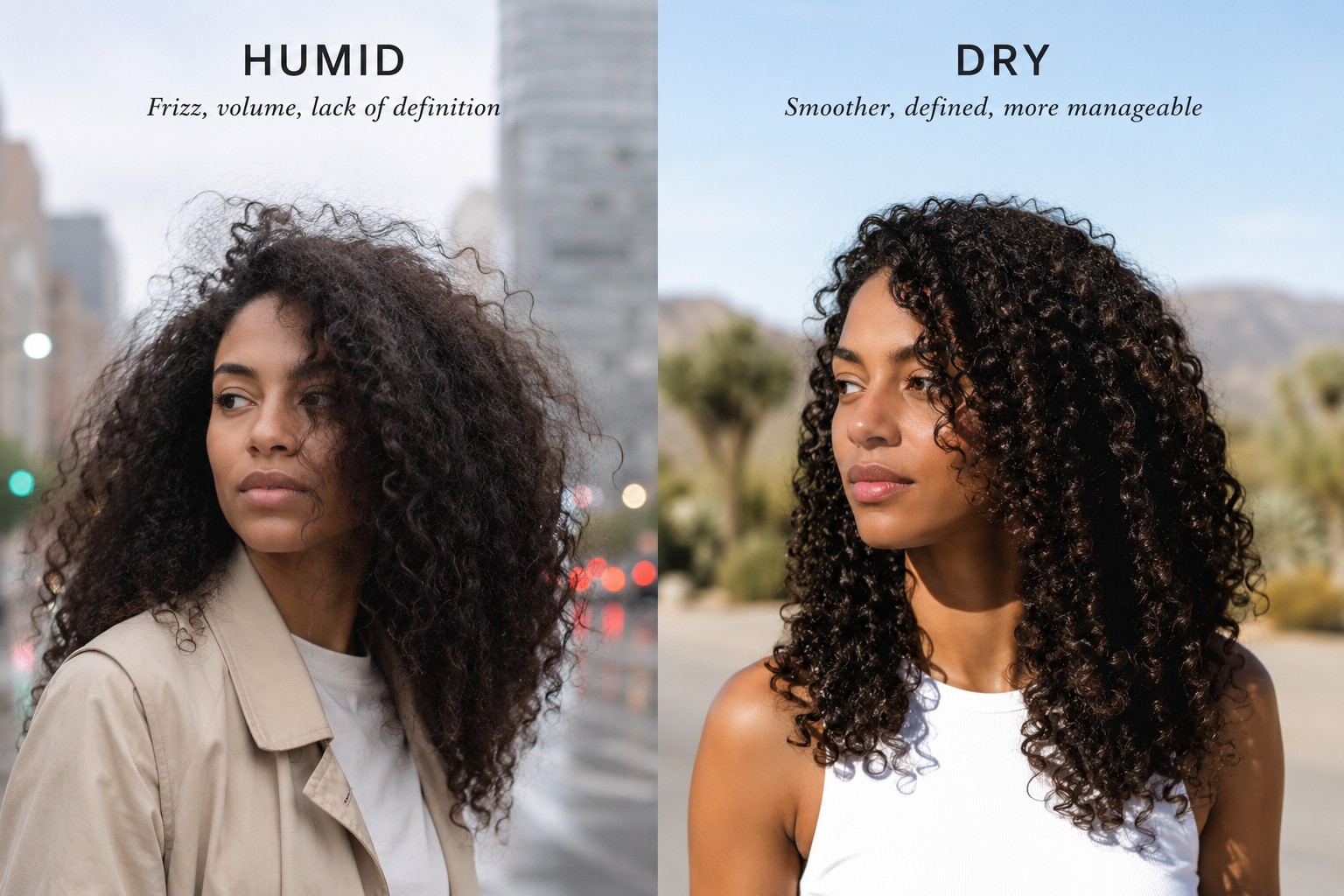
Your surroundings have a direct effect on your hair. If you don't think about the weather, you won't get consistent results, even if you're doing everything else right. Hair responds to what's going on around it as much as it does to what you're doing to it.
Humidity adds too much moisture to the air and makes hair swell and lose its shape, causing frizz, especially if your hair is textured or porous. You need products that manage the moisture without weighing your hair down. Dry weather does the opposite: it takes moisture out of your hair, making it brittle and prone to breaking.
In this kind of climate, keeping hair hydrated is the priority, and your routine should focus on holding onto moisture. And of course, extreme temperatures have a part to play. Heat makes you produce more oil and sweat, and cold weather can make hair more easily damaged. You need to change your approach depending on the weather, not stick to the same routine all year.
What you do every day also affects how your hair holds up. Regular exercise means sweat and friction, which impacts how clean and how your hair is styled. Traveling means your hair is exposed to different climates, types of water, and different routines. Being outside in the sun, wind, and pollution all affect your hair’s health over time. Without adjusting your care, these things slowly make your hair harder to manage.
And how much time you have is important too. A routine that doesn't fit your lifestyle will become irregular. When looking after your hair feels rushed, the quality goes down, and the results are unpredictable.
A good routine isn't something you set in stone - it changes. You should choose your products and how often you wash your hair depending on the weather and what you’re doing. Lighter products and anti-frizz solutions are best in humid weather.
In dry climates, heavier conditioning and keeping the moisture in are key. Seasonal changes should be what tell you to adjust, rather than doing the same thing all year round. Changing like this means you'll have a more consistent outcome; your hair will respond to its surroundings, and the results won't go up and down.
Hair care isn't for you to be perfect. It's about being consistent and having realistic expectations. If you expect perfect hair every day, you’ll get frustrated and try too hard.
More effort doesn't automatically equal better results. Doing too many things to your hair can exhaust you, and not actually improve it. What's important is doing something regularly, not doing something intensely. A simple routine you stick to will do better than a complicated one you only do now and then. Focus on what you can manage, not what would be perfect.
Hair will grow, get thicker, and shinier over time. No routine will give you a transformation overnight. Improvements come slowly, as your hair responds to being looked after in a steady way. Expecting instant results often means you’ll change products or routines too quickly. This stops you from making progress and makes it difficult to know what’s actually working.
Don't fall for the trap of trying to be perfect. Social media creates unrealistic ideals. Perfectly styled hair usually involves professional equipment, editing, and very controlled conditions - things you don't get in your normal life. Comparing your hair to that makes you unnecessarily unhappy. Real hair care is about making things better, not being perfect. If you have reasonable expectations, the routine will be easier to follow, the results will be more stable, and you'll actually achieve them.
The best routine is the one you can keep going with. Making low-maintenance choices reduces the effort in the long term by removing unnecessary steps and focusing on what consistently works. Instead of dealing with your hair every day, you make choices that make looking after it easier over time.
And the style you choose has the biggest effect on how much effort it takes. Haircuts that actually grow out nicely mean you won't be rushing to the salon all the time, or fiddling with your hair every day. And styles that don't demand a ton of heat or product well, they'll hold their shape for much longer, because they're working with your hair's natural texture and how it likes to fall.
You won't be constantly reshaping it. Really, the whole point is to have a style that just holds. When it does, your hair routine is easier and more of a habit. You're keeping a good thing going, not endlessly fixing it.
Too many products? They don't magically make things better; they’re usually just confusing. And piling on lots of different formulas without a good reason leads to buildup and unpredictable results. A simpler routine centers around just a few products specifically for your hair, and you stick with them. You aren't endlessly swapping things out. This cuts down on ‘what to use’ stress, and your routine becomes quicker and more reliable.
Optimizing your routine is about removing any snags. Reducing the number of steps doesn't mean you’re being less careful; it’s about only doing what's truly needed. A streamlined process is easier to do repeatedly, and because it's easier, you'll do it regularly.
And consistently following a simple routine will give you better results in the long run than a complicated one you don't do all the time. If you do the same things, at the same time, each day, you don't have to think about it - it just happens. Over time, looking after your hair becomes a part of your life, not a chore.
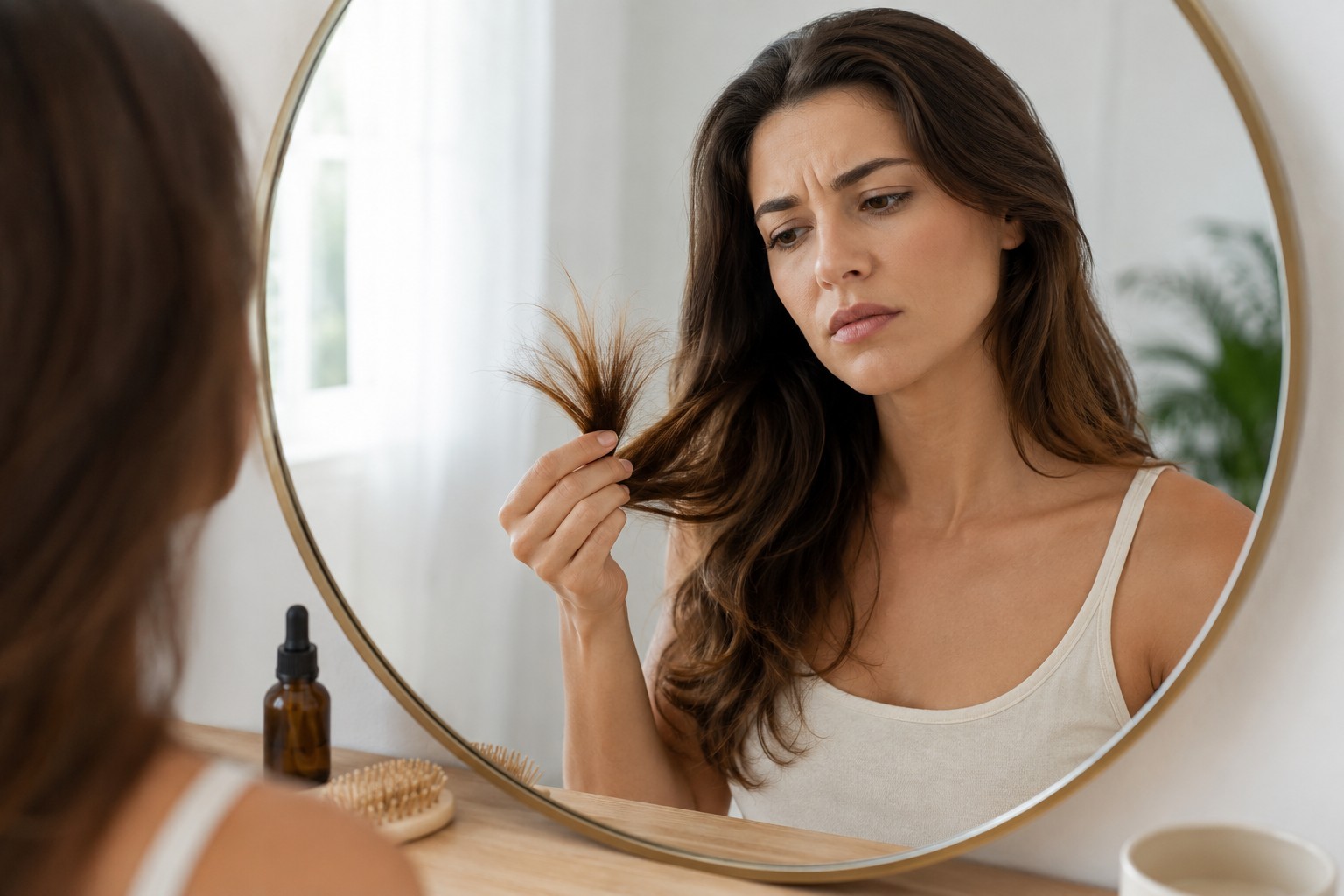
Generally, problems with hair are from doing too much or doing the wrong thing. Most of the time, it isn't because you’re neglecting your hair; it’s from using the incorrect approach too often, or at the wrong moment.
Washing too frequently strips your hair of its natural oils, making it dry and prone to breaking. But not washing enough allows oils, sweat, and product to accumulate and harm your scalp and the hair itself.
Getting the balance right depends on your hair type, how active you are, and where you live. There's no one-size-fits-all answer. Pay attention to how your hair is behaving and adjust how often you wash it accordingly, rather than following a strict schedule.
Products won't work if they aren't a good match for your hair’s texture. Heavy products will flatten fine hair, while very light formulas might not be enough for thicker, coarser hair.
And constantly switching products doesn't give anything a chance to show what it can do. Focus on what’s compatible with your hair, not what's currently popular. Choosing products for your hair's needs will get you more stable and predictable outcomes.
Damage doesn't appear overnight; it slowly gets worse. And early indications of damage – dryness, split ends, more breakage – are often ignored until they become serious. Deal with those early signals, and you can stop the damage from becoming a bigger problem. Small changes, like using less heat or a specific treatment, can prevent things from escalating. Ignore those early warnings, and you'll end up needing a much more involved repair process, which will take a lot longer.
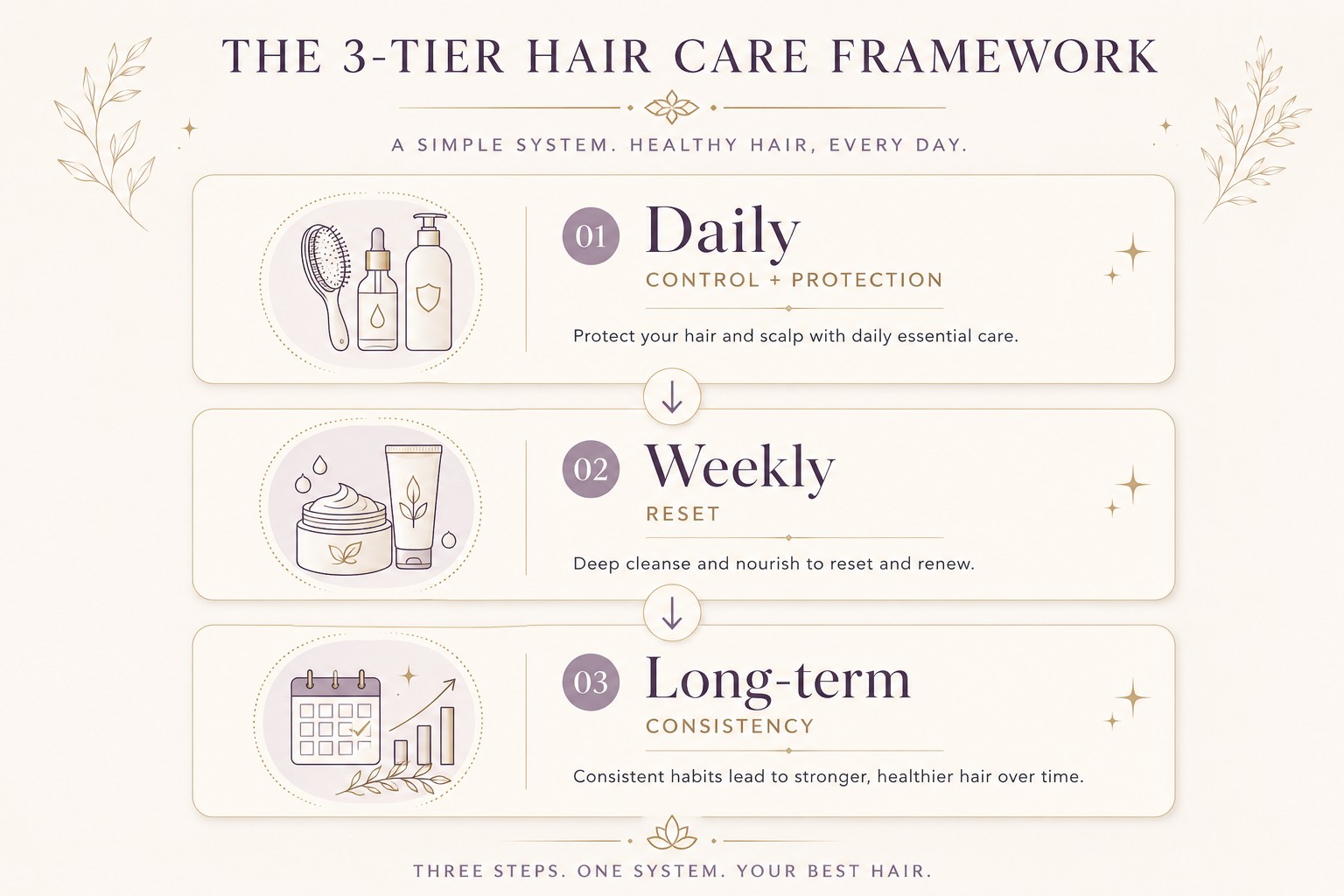
Your hair system needs to fit your life, not the other way around. The aim is a routine you can stick to that gives the best results, rather than chasing perfection.
First, figure out your hair type, how it’s textured, and its condition. This is the foundation of your routine. Without it, every decision is just guesswork.
Then, create a simple routine for each day. Focus on controlling and protecting your hair, rather than overhauling it. Tasks should be quick, repeatable, and based on what your hair needs at that moment.
After that, plan a weekly ‘reset’ - washing, conditioning, scalp care, all based on what your hair needs. This is when you tackle anything that’s built up over the week and bring things back into balance.
Each step should flow into the next. A well-structured routine means everything you do has a reason.
Doing things consistently is what gets results. Even the best routine won't work if you don't actually do it. Stick to one approach and let it work, rather than constantly changing things.
You don't need to keep changing things up; you need stability. And keep an eye on how your hair responds over time. Adjust if you need to, but don't make big changes for no reason. A routine that's stable and you stick to is far better than one that's perfect but inconsistent.

Hair care doesn't have to be a headache or feel overwhelming. When you move from just doing whatever to actually having a routine, looking after your hair becomes consistent, manageable, and works.
The important thing is to change how you approach things. Instead of fixing problems as they happen, build a routine that prevents them. Instead of changing products all the time, get to know what your hair actually needs and stick with what works.
Small, consistent actions are more effective than complicated routines you only do sometimes. Once you have a personal system, hair care stops feeling like a chore and becomes a normal part of your day. The aim isn't perfect hair; it’s reliable, healthy hair, and that’s what proper maintenance is all about.
Most routines fail not because they're flawed, but because they're overcomplicated, don't match your hair type, or don't fit your lifestyle. A routine only works when it's consistent, realistic, and built around how you actually live.
There's no universal schedule — it depends on your hair type, activity level, and climate. Washing too often strips natural oils; not washing enough lets buildup accumulate. Match your washing frequency to when your hair actually needs it, not to a calendar.
Wigs and extensions have different needs. They don't produce their own oils, so they need different conditioning. They can't repair themselves like natural hair, so daily handling matters more — less heat, less friction, gentler brushing. Treating them like your own hair shortens their lifespan dramatically.
Real progress shows up gradually — less breakage, less frizz between washes, healthier-looking ends over weeks and months. Hair won't transform overnight. Compare how your hair looks and feels now versus a few weeks ago, not to social media ideals.
Be consistent with a routine that fits your life. The best routine is the one you can actually keep going. Doing simple things reliably beats doing complicated things occasionally. Once your routine matches your hair type, your lifestyle, and your environment, real progress happens naturally.
Continue exploring the other Hairporium guides covering hairstyle decisions, wigs, extensions, hair problems, lifestyle hair, and the Hair Decision Engine.
What Hairstyle Suits Me?How to Choose the Right WigHow to Choose Hair ExtensionsHair Problems GuideLifestyle Hair GuideHair Decision EngineThe Hairporium AI Hair Stylist builds a hair care plan around your specific hair type, lifestyle and goals. Free, no account needed.
Start your free hair consultation →