

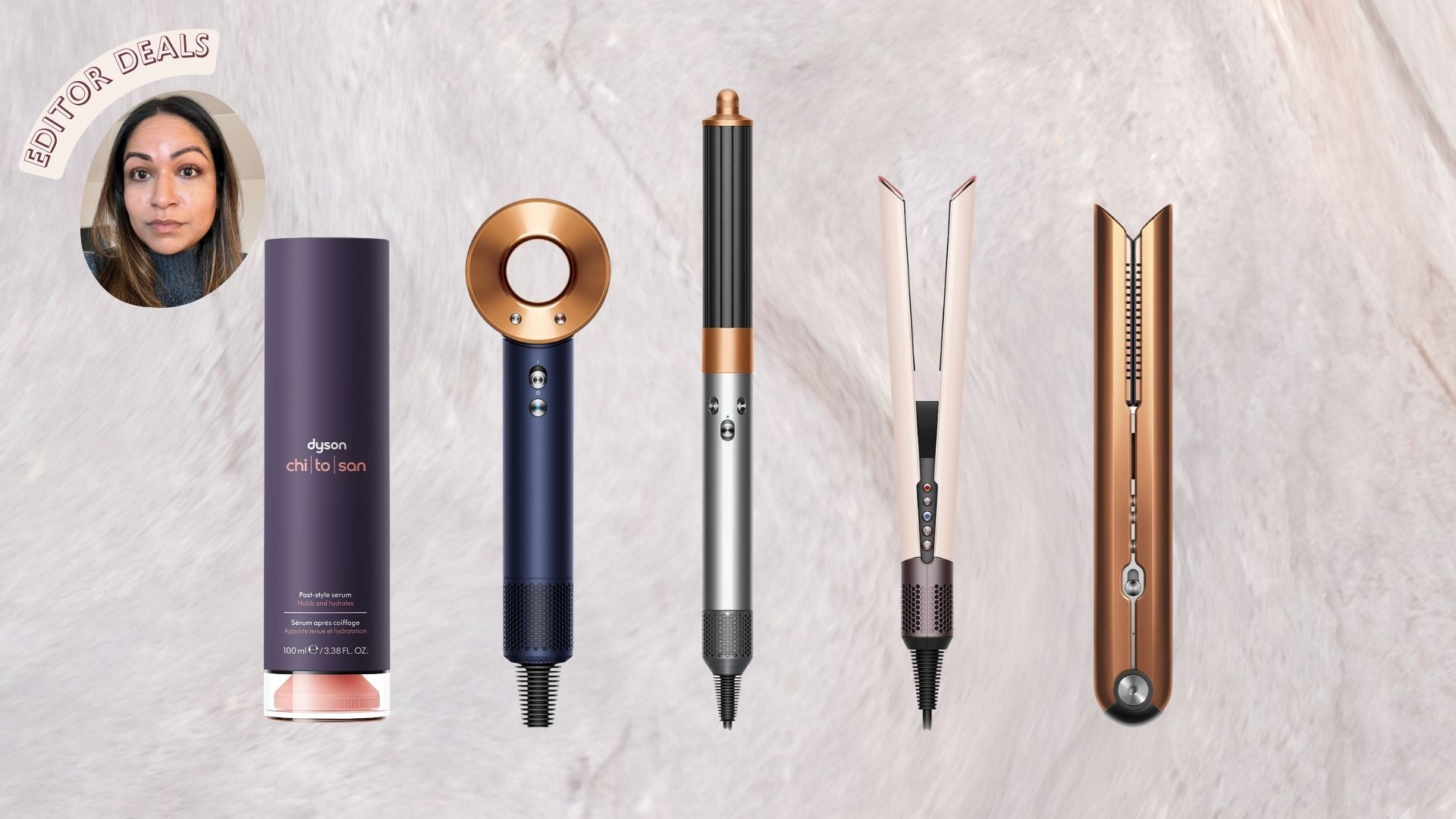
Dyson hair tools sit firmly in the “investment” bracket — and for plenty of UK shoppers, that means the best time to buy is when a rare discount appears. A recent round-up from woman&home flagged exactly that: deals are popping up, and the writer has tested a broad spread of Dyson’s line-up to narrow down what’s genuinely worth recommending.
Rather than treating this as a shopping list, it’s more useful to translate the hype into something practical: which tools solve which hair problems, what to look for in terms of attachments and settings, and how to use them in a way that protects hair quality over time. Below, we break down the Dyson categories that tend to earn repeat use in real routines — plus the common mistakes stylists see when people first bring one home.
1) Start with your hair goals (not the gadget)
In salon terms, the “best” hot tool is the one you’ll use correctly and consistently for the finish you want — whether that’s a smoother blow-dry, faster styling on thick hair, or creating shape without feeling like you’re scorching your lengths.
Dyson’s proposition is largely about controlled heat and powerful airflow, plus attachments designed to reduce the need for very high temperatures. Many stylists like that direction of travel because it nudges routines towards less aggressive daily heat habits — though technique still matters, and no tool is a free pass for repeated, high-heat styling.
- If your main issue is frizz and a blow-dry that won’t last, you’ll likely get the most value from a dryer with smoothing/styling attachments.
- If you want curls and waves with less “clamp and crease”, an air-based curler is usually the most relevant category.
- If you primarily straighten, focus on plates/technology and whether your hair can tolerate frequent direct heat, even at controlled settings.
- If you travel or have small storage, weight, case design and attachment versatility become important — not just headline performance.
Real-world next step: before you buy (especially during a deal window), write down the one finish you wear most weeks — then match the tool to that finish, not the other way around.
2) Tools that tend to justify the spend in everyday UK routines
The woman&home piece is framed around tested favourites and timely discounts. While deals vary by retailer and week, the logic is consistent: where Dyson can feel most “worth it” is in categories where you’d otherwise use multiple tools (dryer + brush + straighteners, for example) or where speed makes a meaningful difference to your morning routine.
In practice, three Dyson tool types are the most commonly debated in UK beauty circles:
- Multi-stylers (for blowouts, waves, smoothing and drying): best for people who like to change their look and want one system with attachments.
- Hair dryers: strong choice if you blow-dry often and want a faster dry with more controlled finishing.
- Straighteners: most relevant if you regularly straighten and want results with less extreme heat — but your technique and hair condition still drive outcomes.
Where buyers sometimes feel disappointed is expecting a tool to “fix” hair that’s already dehydrated or overstretched from colouring. Tools can refine a finish, but the foundation is still condition, cuticle health, and how you prep.
Many stylists recommend thinking of results as a simple equation: prep + technique + tool. If prep is missing, even the best tool can deliver a shiny finish for a day, then leave hair feeling rough after repeated use.
3) How to get better results (and less damage) with hot tools
The core appeal of premium tools is control — but that only helps if you treat your routine like a system. In UK winter especially, indoor heating plus cold outdoor air can make hair static-prone and dry, so the way you style in December may need a tweak compared to summer.
Here are professional best-practice habits that typically improve results with any premium tool — Dyson included:
- Don’t start on soaking-wet hair unless the tool is designed for it. For most routines, gently towel-dry and detangle first to reduce mechanical stress.
- Use sectioning like a stylist. Smaller, even sections mean fewer passes and less total heat exposure.
- Prioritise root direction. If you want lift, dry roots first with tension; if you want sleekness, direct airflow down the hair shaft.
- Finish matters. A cool shot (or simply letting hair cool in shape) helps set movement and can improve longevity.
- Mind your ends. Ends are older, more porous and usually the first to show wear; keep heat exposure there brief and intentional.
On scalp comfort: if heat styling causes persistent irritation, flaking, or soreness, it’s sensible to pause and reassess your routine. Dermatologists often advise keeping heat away from the scalp where possible and avoiding excessive tension; if symptoms persist, seek professional medical advice.
4) Buying during discounts: what to check before you click
The original article highlights that Dyson discounts can be unusually rare, which is why “deal weeks” get attention. If you are shopping around a promotion, the smartest approach is to make sure you’re comparing like-for-like — because bundles and attachments can change the value dramatically.
- Confirm the exact model name and generation. Listings can look similar, but attachments and settings may differ.
- Check what’s in the box. Different sets include different barrels/brushes/cases; don’t assume.
- Look at voltage and plugs for UK use. Buy from reputable UK retailers to avoid compatibility issues.
- Review returns and warranty. A generous return policy matters if you’re learning a new tool.
- Factor in your routine. If you air-dry most days, a very high-end dryer may be less “worth it” than a versatile styler you’ll actually use.
Real-world next step: take five minutes to list the attachments you’ll genuinely use weekly — then only consider bundles that match that list (even if a bigger set looks more impressive).
Key Takeaways
- Choose a Dyson tool based on your most-worn hairstyle (sleek blow-dry, waves, straight finish), not just what’s trending.
- Multi-stylers and dryers often feel most “worth it” for people who style frequently and value speed plus finish control.
- Better results come from prep and sectioning: fewer passes, less overall heat, and a longer-lasting style.
- Discount weeks can improve value, but always compare model generation, attachments and warranty terms.
- If you notice scalp discomfort from heat or tension, pause and reassess; persistent issues warrant professional advice.
Frequently Asked Questions
Are Dyson hair tools less damaging than other hot tools?
Many stylists consider controlled temperature and efficient airflow a step in the right direction, but “less damaging” still depends on your frequency, technique, section size, and how well-conditioned your hair is.
Which Dyson tool is best if I want a salon-style blow-dry at home?
If your priority is a smooth, long-lasting blowout, look towards a dryer or multi-styler set-up that includes a smoothing attachment and a brush designed for tension.
Do I still need heat protectant with a premium tool?
Yes — most professional routines include a heat protectant to help reduce moisture loss and friction during styling. Use it on damp hair for blow-drying and on dry hair for straightening (as directed on the product).
How do I make my style last longer in UK winter weather?
Dry hair fully (especially the roots), use smaller sections, let the hair cool in the shape you’ve created, and avoid heavy product layering that can collapse volume. A light finishing spray can help hold without stiffness.
What’s the biggest mistake people make when using an air-based curler?
Taking sections that are too large or too wet. Moderate, even sections and partially dried hair typically give a cleaner curl pattern and longer hold.
Is it worth buying during a deal week?
If you already know which tool suits your routine, discounts can be a sensible time to buy. Just confirm the exact model and attachments so the “deal” is truly comparable.
Explore More: Discover related reads from Hairporium — News • Guides • DIYs • Expert Articles.
Learn More: Explore detailed haircare routines and styling tips at Hairporium Guides.


More in Hair guides
A budget thickening serum has gone viral with mature UK shoppers. Here’s what thickening products...
Nicole Kidman’s natural curls are a timely reminder: healthy texture comes from technique, not pe...
A practical UK guide to Bardot-inspired hair: lifted crown, soft texture and brushed-out waves, w...
Facial hair and weight changes can be part of a broader hormonal picture, including PCOS. Here’s ...
UK stylists are already spotlighting 2026’s chic hair direction: softer cuts with movement, riche...
From romantic soft wave bobs to laser-sharp lines, the 2026 bob is all about adaptable styling. H...
A modern fringe can be a surprisingly effective way to disguise thinning at the hairline and crow...
Hair shedding can feel alarming, but everyday habits—tight styles, heat, rough handling and scalp...
A stylist-approved “invisible face-lift” haircut uses face-framing layers and subtle lift to refr...
A stylist-informed guide to what “thicker” and “shinier” really mean in haircare — and the practi...
View all hair guides