

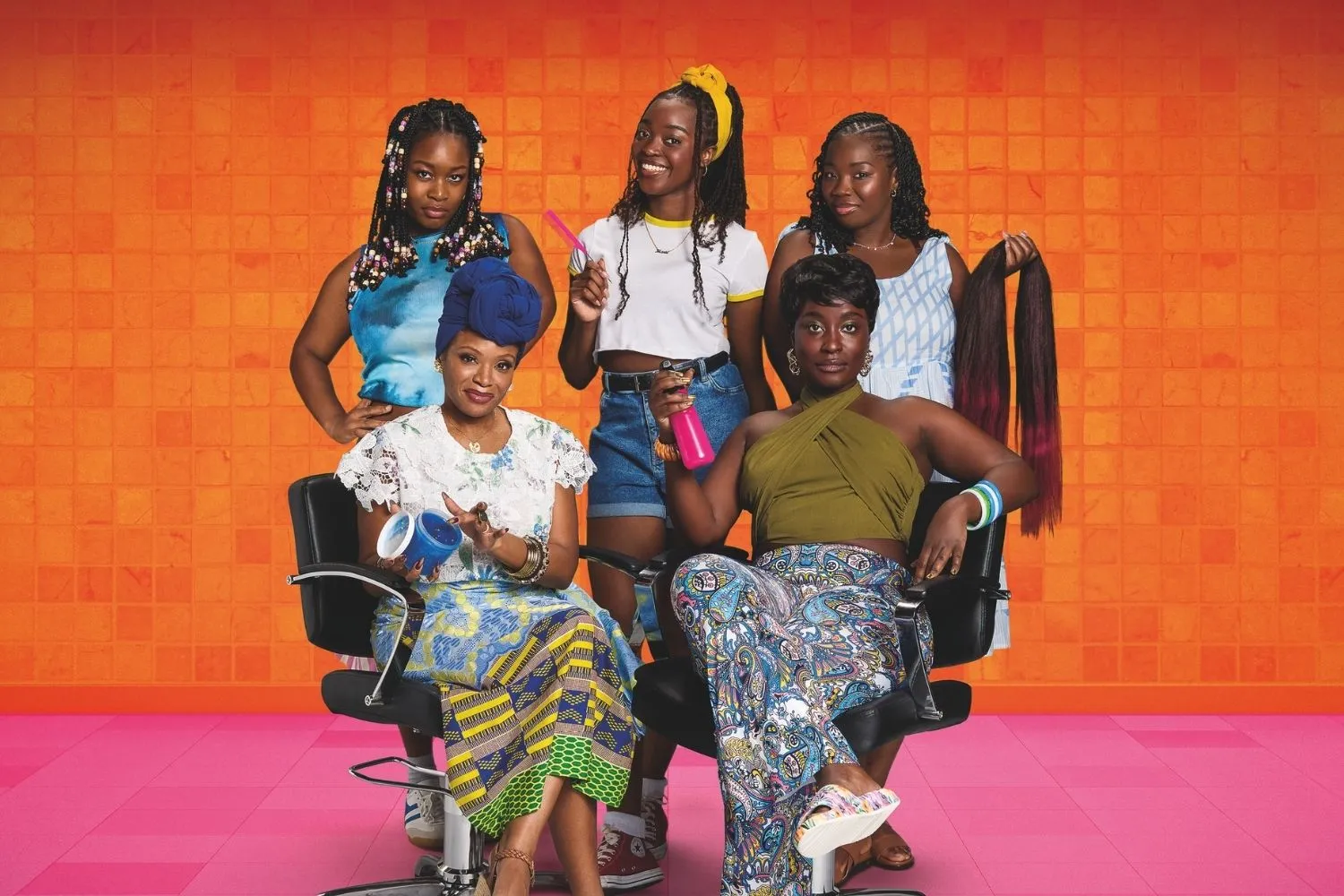
London’s theatre calendar is about to get a meaningful dose of hair culture, craft and community. The award-winning play Jaja’s African Hair Braiding is heading to the UK, and the newly revealed cast announcement signals more than another exciting opening night: it shines a spotlight on the lived realities inside a braiding salon — the place where artistry, identity, humour and hard conversations often meet.
For Hairporium readers, this is the kind of mainstream moment worth noting. Hair braiding isn’t a “trend”; it’s a heritage skill and a working environment shaped by client expectations, time, technique and care. When a stage production centres a braiding shop, it invites wider audiences to see the nuance behind the styles — and, crucially, the people who create them.
Why a braiding salon story matters in the UK right now
In the UK, African hair salons are cultural institutions as much as service spaces. They’re where protective styling is passed down, where new arrivals find local networks, and where conversations unfold across generations. A play set in a Harlem braiding shop may be rooted in an American setting, but many of its themes translate directly to British high streets — from Brixton to Birmingham, from Manchester to Milton Keynes.
There’s also a broader cultural context: the UK has seen growing public discussion about textured hair, workplace policies and the everyday labour behind “effortless” looks. Theatre can play a powerful role in widening understanding — not through lectures, but through character, comedy, tension and humanity.
Real-world practicality: if you’ve never watched a production that explores hair culture, consider booking with a friend and treating it like a conversation starter — it’s a surprisingly good way to help colleagues or classmates understand why protective styling choices matter.
What the cast reveal signals for representation on stage
Cast announcements can sometimes feel like theatre housekeeping, but for productions anchored in specific communities, they often carry larger significance. A braiding-salon story requires performers who can hold the rhythm of salon life — the pace, the banter, the intimacy with clients, and the emotional shifts that happen in a chair.
While cast reveals are primarily a performance detail, they also influence how audiences experience authenticity. In hair spaces especially, authenticity isn’t only about accents or costume; it’s about believable handling of hair practices, the social choreography of a busy shop, and the respect shown to the craft.
Many productions consult movement and cultural specialists; increasingly, hair and grooming teams are asked to reflect textured-hair realities properly too. For UK audiences, this matters: too often, Black hair is treated as a background aesthetic rather than a professional discipline with time demands, technique and aftercare considerations.
The craft behind braiding: what audiences often don’t see
Braids on stage might read as a style choice, but anyone who’s booked a braid appointment knows it’s skilled work with practical constraints: sectioning, tension control, hand stamina, time management and client comfort. Protective styling can be lower maintenance day-to-day, but it isn’t “quick” or “easy” to install well.
In professional best practice, many stylists recommend:
- Clear consultations: agreeing size, length, hair added (if any), and finish before starting — it saves time and avoids disappointment.
- Tension awareness: braids should feel secure, not painful; persistent soreness can be a sign they’re too tight.
- Scalp-friendly prep: cleansing and fully drying the hair before braiding, with a focus on build-up removal.
- Edges and hairline respect: avoiding repeated high-tension styles in the same direction, especially around the hairline.
- Aftercare planning: knowing how you’ll cleanse, moisturise and protect the style at night (think satin bonnet or scarf).
It’s also worth acknowledging the economics of braiding. Pricing often reflects hours of labour, skill level, and the physical demands of the service — which can involve extended standing, repetitive hand motion and intense concentration. When art forms rooted in Black communities reach bigger stages, it’s an opportunity to appreciate the work without flattening it into “a look”.
How to engage with the play — and with braiding culture — respectfully
Hair storytelling can invite curiosity, but curiosity lands best when it’s paired with respect. If the play moves you to try a protective style, start by learning the basics of maintenance and appointment etiquette rather than treating braids as a novelty.
- Do your prep: arrive with detangled hair where possible and be honest about previous colour, heat damage or sensitivities.
- Bring references — but stay flexible: photos help, but your hair density and length will impact the final result.
- Ask about maintenance: a good stylist will advise on cleansing frequency, moisturising and when to take the style down.
- Respect the time: braiding can take hours; bring water, snacks and something to do.
- Know when to stop: if you feel sharp pain or bumps developing, flag it early and adjust tension if needed.
For those already wearing braids regularly, the play’s arrival is also a moment to reflect on how hair spaces function as community hubs — and how we can support healthy practices, fair working conditions and informed conversations around textured hair in the UK.
Explore More: Discover related reads from Hairporium — News • Guides • DIYs • Expert Articles.
Stay Updated: Read more UK hair industry news and innovations on Hairporium News.
Key Takeaways
- A braiding salon setting is culturally significant: it reflects a real UK salon ecosystem where hair, identity and community meet.
- Cast reveals can shape authenticity: performances rely on capturing the rhythm and realities of salon life, not just aesthetics.
- Braiding is skilled labour: time, tension control, sectioning and aftercare planning are central to quality protective styling.
- Respectful engagement matters: curiosity is welcome, but understanding maintenance and appointment etiquette helps avoid harm.
- Practical next step: if you’re inspired, book a consultation and ask about prep, tension comfort, and a realistic upkeep routine.
Frequently Asked Questions
Is Jaja’s African Hair Braiding about hair techniques or salon life?
It’s a play set in a braiding salon, using that environment to explore relationships, work, humour and community dynamics rather than serving as a technical tutorial.
Why are protective styles called “protective”?
Protective styles typically reduce daily manipulation of the hair and help retain length for many people. Outcomes vary, and comfort and correct tension remain important.
Should braids hurt when they’re first done?
Some tightness can happen initially, but persistent pain, bumps or headaches are often signs the style is too tight. Many stylists recommend speaking up immediately so adjustments can be made.
How do I care for my scalp with braids in?
Common salon advice includes cleansing gently (often with diluted shampoo or a scalp cleanser), drying thoroughly, and moisturising as needed without heavy build-up.
How long is it sensible to keep braids in?
It depends on the style, hair type and how it’s maintained. Many clients re-do or remove braids within several weeks to reduce tangling and stress at the roots and hairline.
What should I ask for in a braiding consultation?
Ask about time, pricing, hair required (including extensions if used), tension preferences, maintenance steps, and what to do if you experience discomfort after fitting.


More in Hair news
FKA twigs’ Grammys hair look fused a bold basketweave structure with spiked loc styling—an editor...
A wig coming loose in the ring has renewed attention on how hair systems cope with sweat, frictio...
A Lincolnshire hairdresser marks a year in business with team growth and a new skills academy, re...
Jarrell Miller’s mid-fight “hair malfunction” went viral — but it’s also a lesson in how hair sys...
Catherine, Princess of Wales, has quietly swapped her signature loose curls for a sleeker, more p...
Charlie Le Mindu’s SS26 return puts hair in the couture spotlight. We unpack what “hairy, furry, ...
A UK tribunal decision reported by The Independent found severe baldness can meet the disability ...
A UK ruling arising from a wigs VAT appeal highlights that severe hair loss can, in context, be r...
Barry Keoghan’s Ringo Starr-inspired haircut is more than a celebrity switch-up: it’s a mastercla...
Barry Keoghan’s mop-top debut for his Ringo Starr role has renewed interest in 60s hair. We break...
View all hair news