

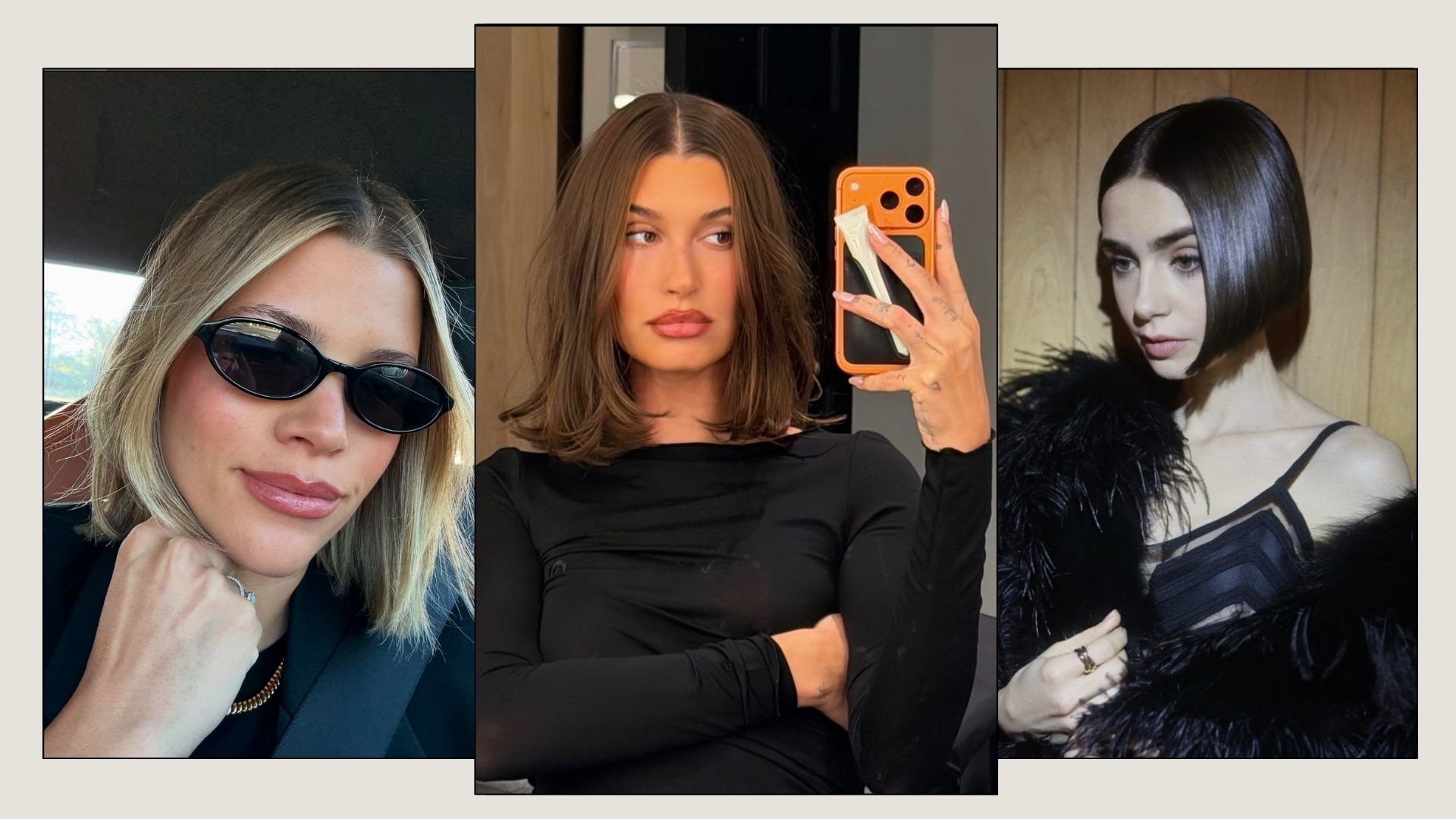
Every so often, a haircut lands that feels both “new” and oddly familiar—modern in its finish, but grounded in timeless technique. For 2026, many stylists are already pointing to the bevelled bob as that cut: a short-to-mid-length bob where the ends are subtly curved inwards (or “turned under”) to create a clean, polished silhouette. It’s been gathering pace on the celebrity circuit—talked about in the context of Hailey Bieber and Sofia Richie Grainge—and it’s easy to see why: it photographs beautifully, it elevates even simple styling, and it gives hair a deliberate shape without looking overdone.
Unlike ultra-blunt bobs that can read severe (especially as they grow out), the bevelled bob is all about controlled softness. Done well, it creates a smooth line around the jaw and neck, with ends that tuck under to make hair look thicker and more expensive—while still being wearable for real life, commutes, and busy mornings.
What exactly is a bevelled bob—and why is it trending now?
A bevelled bob is defined less by length and more by the finish at the ends. Think of it as a bob with a subtle “C-curve” shape: the perimeter is clean, but the final few centimetres are styled (and often cut) to bend inwards. This differs from a flipped-out, ‘90s-inspired bob, where the ends turn up and out. It’s also not the same as heavy layering—bevelled bobs typically keep a strong baseline, using minimal internal shaping so the ends behave predictably.
Trend-wise, it arrives at a moment when beauty is swinging towards high-shine, high-polish hair again—glossy blow-dries, understated luxury, and styles that look “finished” even when paired with minimal makeup. In UK salons, bobs continue to be among the most requested cuts because they’re versatile, suit a wide range of hair types, and can be tailored to face shape with relatively small adjustments.
There’s also a practical reason the bevelled bob is taking off: it’s a shape that doesn’t rely on extreme heat or complicated tools. Many people can achieve the signature curve with a round brush and a hairdryer, or a straightener used with a gentle twist—making it salon-worthy but maintainable at home.
Who suits the bevelled bob? UK stylist considerations
The short answer: most people can wear a bevelled bob, but the most flattering version depends on your hair density, texture, and how much daily styling you realistically want to do.
- Fine hair: A bevelled finish can make fine hair look fuller because the turned-under ends create the illusion of a “solid” perimeter. Ask your stylist for minimal layering and a blunt-ish baseline to keep density.
- Thick hair: This cut can be stunning on thick hair, but it may need internal weight removal so the ends don’t “kick” out. Many stylists use subtle internal texturising to encourage the curve without creating frizz.
- Wavy hair: A bevelled bob can work brilliantly, but you may get a more lived-in curve than a glassy one. If you like a smooth, tucked-under finish, you’ll likely need a blow-dry to set the shape.
- Curly hair: It’s possible, but the “bevel” will look different—more like a rounded bob shape. It’s worth asking for a curl-specialist consultation and talking through shrinkage and neckline length before committing.
- Growing out a bob: The bevelled bob can be a smart transitional cut because it looks intentional as it grows, especially when your stylist maintains a tidy perimeter and neckline.
Face-shape tailoring is where your stylist earns their keep. A jaw-length bevelled bob can spotlight cheekbones beautifully, but it can also feel too sharp if you prefer softness around the face. In that case, many UK stylists will suggest a slightly longer length (grazing the chin or just below) or a subtle curtain fringe to balance proportions.
Real-world next step: before your appointment, save two or three reference photos that show both the front and side profile. The side view is crucial here—it reveals the degree of under-curve, which is what makes the cut.
How to ask for the bevelled bob in the salon (without confusion)
“Bevelled bob” isn’t a universally standard term in every salon, so it helps to describe the outcome rather than rely on one name. Your consultation is the moment to be specific about shape, movement, and maintenance.
- Ask for a strong baseline with ends that are designed to tuck under (not flick out).
- Discuss where you want the weight line to sit: jaw, chin, or just below. This changes the whole vibe.
- Talk through your natural parting and cowlicks at the nape—both affect how neatly the ends curve.
- Be clear on layering: minimal layering keeps the polished finish; too much layering can make the ends feather or flip.
- Request a blow-dry finish that demonstrates the bevel so you can see the intended shape before you leave.
Many stylists will cut the perimeter with precision and then refine the interior so the hair “wants” to curve under. The result should feel sleek but not helmet-like—movement is the point, just controlled movement.
Styling the bevelled bob at home: the polished, wearable method
The bevel is as much about styling as it is cutting. The good news is that you don’t need a salon blow-dry every day—just a consistent technique and the right direction of airflow.
- Start with direction: Rough-dry hair to 70–80% dry, following your natural parting so the top lies smoothly.
- Use a round brush or bend technique: With a medium round brush, pull sections down and slightly forward, then rotate the brush under at the ends to set the curve.
- Set the shape: A cool shot (or simply letting the section cool in position) helps the bevel last longer.
- Refine the ends: If needed, run a straightener through mid-lengths, then gently twist inward at the last few centimetres—small movement, not a full curl.
- Finish for shine: A light serum or smoothing cream can help reflect light and reduce flyaways, especially in winter heating or damp UK weather.
If your ends are consistently flipping out, that’s a clue. It can happen when hair is hitting the shoulders, when there’s leftover bulk at the perimeter, or when the nape growth pattern pushes hair outward. A quick tidy-up or a slight length adjustment often fixes it.
On the maintenance front: most bobs look their best with regular shaping. Many stylists advise booking a trim every 6–10 weeks depending on your growth rate and how sharp you like the outline.
Key Takeaways
- The bevelled bob is defined by ends that subtly curve under, creating a polished silhouette rather than a blunt, rigid line.
- It’s trending for 2026 thanks to its glossy, “finished” look that photographs well and complements minimalist styling.
- Most hair types can wear it—fine hair benefits from a fuller-looking perimeter; thick hair may need internal shaping for control.
- In the salon, describe the outcome (tucked-under ends, strong baseline, minimal layering) and bring side-profile references.
- At home, the bevel is achievable with a round brush or a gentle inward twist with straighteners—then set it with cooling for longevity.
Frequently Asked Questions
Is a bevelled bob the same as a blunt bob?
Not quite. A blunt bob refers to the cut line being very even and strong. A bevelled bob may still have a strong baseline, but the defining feature is the styled (and sometimes subtly cut) inward curve at the ends.
Will a bevelled bob work if I don’t like spending time styling?
It can—especially if your hair naturally bends under. That said, the most “bevelled” look usually comes from a quick blow-dry or a fast heat-tool pass at the ends. If you want wash-and-go, ask your stylist to tailor the cut to your natural texture.
Does the bevelled bob suit a round face?
Often, yes. Slightly longer versions (just below the chin) can elongate the face, and a gentle curve can soften angles. Your stylist may also suggest a side part or face-framing pieces to balance proportions.
My ends always flick out—can I still get this cut?
Yes, but tell your stylist upfront. Flicking can come from hitting the shoulders, cowlicks at the nape, or too much bulk at the perimeter. Small changes in length and internal shaping can make the hair sit under more reliably.
How often should I trim a bevelled bob?
Many people find 6–10 weeks keeps the outline looking intentional. If you’re aiming for a sharper line and a consistent curve, lean closer to 6–8 weeks.
Is this style suitable for wavy or curly hair?
Yes, but it will read as a rounded bob rather than a glassy, tucked-under finish. If you want the sleek bevel on wavy or curly hair, you’ll likely need a blow-dry technique that smooths and sets the ends.
Explore More: Discover related reads from Hairporium — News • Guides • DIYs • Expert Articles.
Stay Updated: Read more UK hair industry news and innovations on Hairporium News.


More in Hair news
FKA twigs’ Grammys hair look fused a bold basketweave structure with spiked loc styling—an editor...
A wig coming loose in the ring has renewed attention on how hair systems cope with sweat, frictio...
A Lincolnshire hairdresser marks a year in business with team growth and a new skills academy, re...
Jarrell Miller’s mid-fight “hair malfunction” went viral — but it’s also a lesson in how hair sys...
Catherine, Princess of Wales, has quietly swapped her signature loose curls for a sleeker, more p...
Charlie Le Mindu’s SS26 return puts hair in the couture spotlight. We unpack what “hairy, furry, ...
A UK tribunal decision reported by The Independent found severe baldness can meet the disability ...
A UK ruling arising from a wigs VAT appeal highlights that severe hair loss can, in context, be r...
Barry Keoghan’s Ringo Starr-inspired haircut is more than a celebrity switch-up: it’s a mastercla...
Barry Keoghan’s mop-top debut for his Ringo Starr role has renewed interest in 60s hair. We break...
View all hair news