

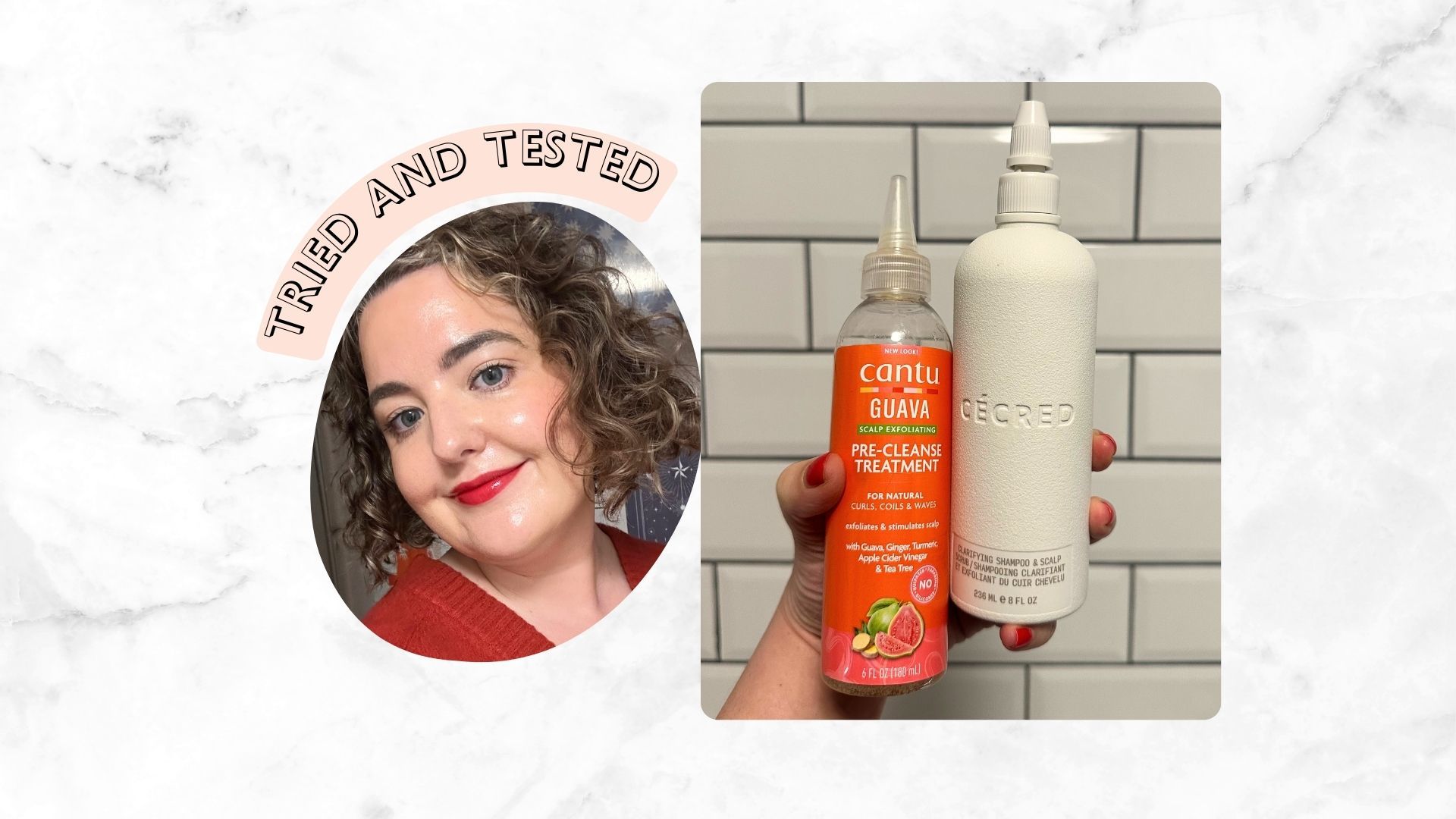
If you wear your hair curly in the UK—whether that’s loose waves, spirals, coils or a mixed pattern—you’ve likely been told to “avoid sulphates” and “never strip your hair”. That advice can be helpful, but it can also miss a crucial detail: curls are prone to build-up. When styling creams, gels, oils, leave-ins, hard-water minerals and even dry shampoo residue accumulate, curls often lose their spring, definition and shine. That’s where clarifying shampoo comes in. Used correctly, it can be one of the most noticeable resets in a curly routine: less frizz, better curl clumping, and a scalp and lengths that behave more predictably.
What clarifying shampoo actually does (and why curls notice)
A clarifying shampoo is formulated to remove stubborn residue that standard “gentle” shampoos may leave behind. In curly hair routines, this matters because we typically use more styling products—layering leave-in conditioner, curl creams, gels, mousse, edge control, oils, and heat protectants. Over time, that film can interfere with how water penetrates the hair and how conditioners bond, leaving curls looking dulled or oddly fluffy.
Many stylists describe the effect as a “reset wash”: your hair can feel lighter, curls may form more cleanly, and your styling products can start working the way they were meant to. For people with low porosity hair (common among curl patterns that resist getting fully wet), clarifying can be especially impactful because build-up tends to sit on the surface rather than rinsing away.
In UK haircare context, there’s another major culprit: hard water. Many regions—particularly London and the South East—have higher levels of calcium and magnesium. These minerals can cling to hair and make curls feel rough, look dull, and tangle more readily. Some clarifying shampoos are also “chelating” (designed to lift mineral deposits). Not every clarifier is a chelator, so if hard water is a known issue, it’s worth checking the label.
Signs your curls might need a clarify (not just “more moisture”)
Curl problems are often treated as a moisture issue, when the real cause is build-up. Before you pile on richer masks, it can be worth asking whether your hair needs cleaning—not conditioning.
- Your curls won’t clump the way they used to; they separate into fluffy strands.
- Products sit on the hair, leaving a coated or tacky feel even after rinsing.
- Hair looks dull and photographs matte, even after a good styling day.
- Frizz appears quickly (sometimes within hours), despite using hold products.
- Your scalp feels “busy”—itchy, waxy, or like it never gets properly clean (without implying a medical condition).
- Hair takes ages to get wet in the shower, or feels oddly water-repellent.
If you recognise two or three of these, a careful clarify could be a smart troubleshooting step—especially before a big haircut, a curl refresh appointment, or an event where you want definition to last.
How to use clarifying shampoo on curls without drying them out
The fear with clarifying shampoo is completely understandable: curls can be drier by nature because the bends in the strand make it harder for natural oils to travel down the hair. But “clarifying” doesn’t have to mean harsh—frequency, technique, and what you do afterwards make the difference.
Many curl specialists recommend clarifying occasionally rather than weekly, and following it with targeted conditioning. If you colour your hair, heat-style often, or have a curl pattern that tangles easily, a gentler approach is key.
- Start with your scalp: apply primarily to roots and massage thoroughly, letting the lather rinse through the lengths rather than scrubbing ends.
- Use warm (not hot) water to help lift residue without over-drying.
- Double cleanse only if needed: if you use heavy stylers or lots of dry shampoo, a second light wash can help—otherwise one round is enough.
- Condition with intention: follow with a conditioner that gives slip, then consider a mask on mid-lengths and ends.
- Style on soaking-wet hair: curls often clump best post-clarify; apply leave-in and styler while hair is very wet to encourage definition.
Practical next step: if you’re nervous, trial clarifying once every 3–6 weeks, then assess your next two wash days. If definition improves and frizz reduces, you’ve found a useful rhythm.
Clarifying vs chelating vs “sulphate-free”: what matters most
The way clarifying is discussed online can get confusing fast, especially when “sulphate-free” is treated as a universal rule. In reality, curls thrive on balance. Some sulphate-free shampoos clarify well; some don’t. Some sulphate shampoos are too strong for frequent use but can be brilliant occasionally—particularly for heavy build-up days.
Here’s the simple distinction many pros use:
- Clarifying shampoo: focuses on removing product residue, excess oils and environmental grime.
- Chelating shampoo: targets mineral deposits from hard water or pool water (often a game-changer for curls in hard-water areas).
- Gentle daily/regular shampoo: maintains cleanliness in between without a full “reset”.
If your curls improve for one wash day then quickly decline again, hard water may be a factor. A chelating wash used occasionally—followed by replenishing conditioner—can make a noticeable difference in softness and shine. If your main issue is product build-up, a standard clarifier may be enough.
It’s also worth noting that a squeaky-clean feel isn’t the goal for curls. Many stylists aim for “clean but comfortable”: a scalp that feels fresh and lengths that feel free of coating, without leaving the hair rough.
Key Takeaways
- Clarifying shampoo can help curls look springier and less frizzy by removing product film and build-up that blocks definition.
- If you live in a hard-water area, consider whether you need a chelating shampoo occasionally to tackle mineral deposits.
- Common signs you need a clarify include dullness, poor curl clumping, sticky residue, and products that stop “working”.
- Use clarifier strategically: focus on scalp, avoid aggressive scrubbing on ends, and follow with slip-rich conditioner or a mask.
- Try a gentle schedule (every 3–6 weeks), then adjust based on how your curl pattern responds over the next couple of wash days.
Frequently Asked Questions
Will clarifying shampoo ruin my curls?
Used occasionally and followed with conditioning, clarifying shampoo shouldn’t “ruin” curls. Problems usually come from overuse, very hot water, or skipping moisture and slip afterwards.
How often should I clarify curly hair?
There isn’t one perfect rule. Many people with curls do well clarifying every 3–6 weeks, while heavier product users may prefer every 2–4 weeks. If your hair feels dry, stretch the time between clarifying washes.
Is clarifying shampoo the same as a detox shampoo?
They’re often used interchangeably. The key is what the formula removes (product residue vs minerals). “Detox” is sometimes a marketing term, so focus on the shampoo’s purpose and how your hair responds.
Can I clarify if I have coloured or bleached curls?
You can, but be cautious. Choose a gentler clarifier, avoid clarifying too frequently, and follow with a conditioner or mask focused on softness and elasticity. If in doubt, ask your colourist what suits your service and curl type.
Why does my hair feel rough after clarifying?
It may be genuinely clean but under-conditioned, or you may have mineral build-up that needs chelating, not repeated harsh cleansing. Restoring slip (conditioner, mask) and using cool water to finish can help the cuticle feel smoother.
Do I still need conditioner after a clarifying shampoo?
Yes—most curls benefit from conditioner every wash day. After clarifying, it’s especially helpful to use a conditioner with good slip to reduce tangles and improve curl clumping.
Explore More: Discover related reads from Hairporium — News • Guides • DIYs • Expert Articles.
Learn More: Explore detailed haircare routines and styling tips at Hairporium Guides.


More in Hair guides
Courtney Stodden’s new hair colour is a timely prompt for a new-year refresh. Here’s how to descr...
A stylist-informed, no-heat air-dry routine for fine hair that builds root lift and natural waves...
Polygonum multiflorum is trending as a potential hair-loss helper. Here’s what the research may m...
Silk and satin bonnets can help protect hair from overnight friction, preserving styles and reduc...
Silk pillowcases are everywhere in beauty sleep chats. Here’s what they can realistically do for ...
Mousse, hairspray, dry shampoo and hair oil can transform hair — but only if you use them correct...
Celebrity “glossy hair” headlines are everywhere, but shine is mostly about technique and cuticle...
Dermatologist-informed guidance on how often to wash your hair, based on scalp type, texture, lif...
A discounted “Dyson dupe” hair dryer is making headlines — here’s how to judge lookalike dryers p...
Sara Cox’s “86p-a-day” hair supplement recommendation has renewed interest in budget beauty vitam...
View all hair guides