

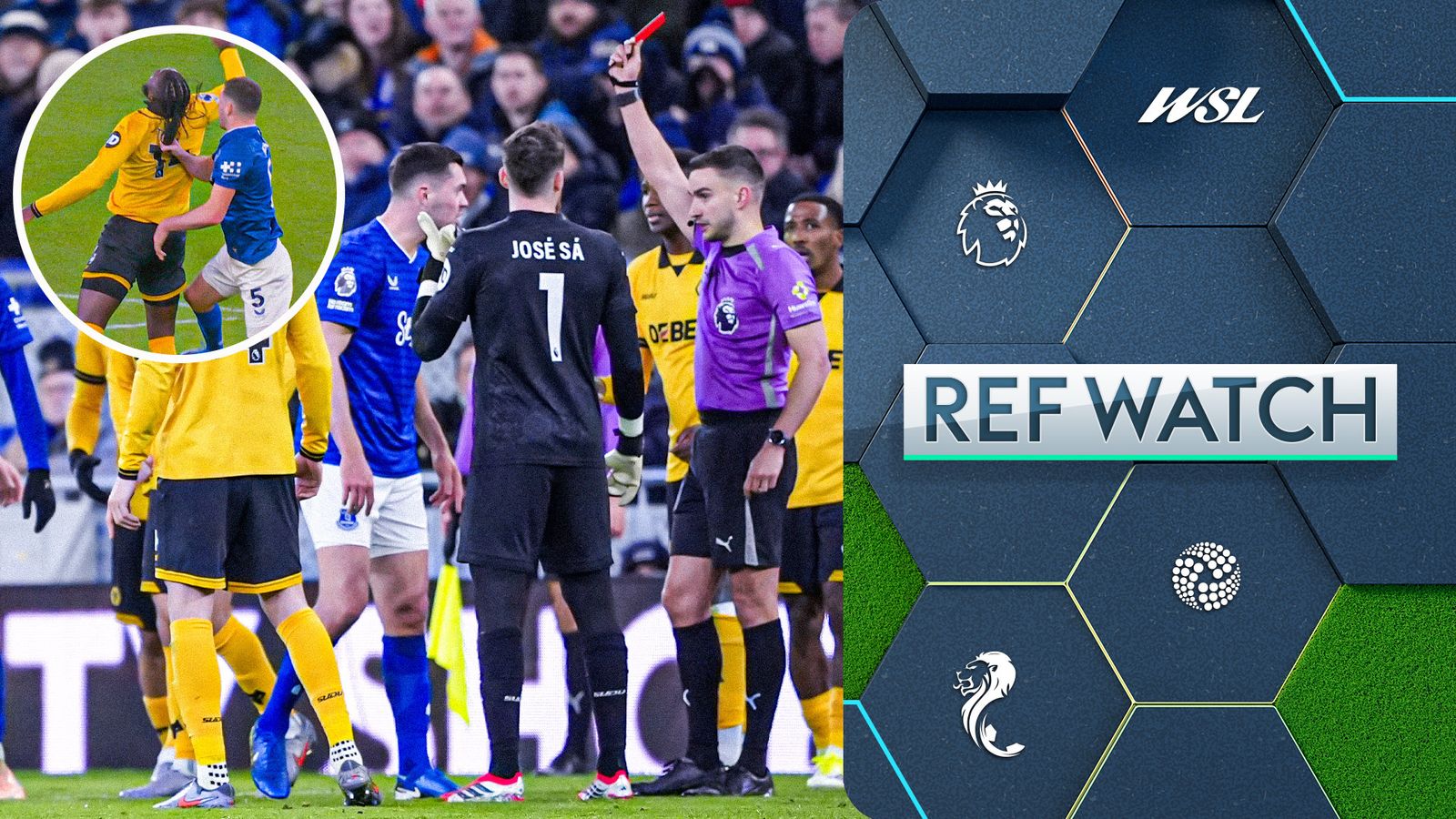
A Premier League talking point rarely overlaps with hair care — yet a recent Ref Watch segment highlighted exactly that. Sky Sports examined why Michael Keane was shown a red card after pulling the hair of Wolves forward Tolu Arokodare, underscoring that hair pulling isn’t treated as a minor infringement but as serious misconduct.
For anyone who wears their hair longer for sport — whether that’s a slick ponytail, braids, locs, twists or a grow-out — this moment is more than football debate. It’s a reminder that hair is part of the body’s safety equation: it can be grabbed, yanked and used to control movement, with real risk of pain, breakage and scalp strain. While we should avoid medical claims, many stylists and sports physios alike often suggest prioritising secure, low-tension styles for training and match days to reduce the likelihood of traction and snagging.
Why a hair pull is treated as serious foul play
In Sky Sports’ breakdown, the headline is clear: Keane’s action was deemed significant enough to warrant a straight red. In football, officials weigh more than the effect on play — they consider whether an action is violent, dangerous or shows intent to harm. Hair pulling falls into that bracket because it’s a form of grabbing that can cause immediate pain and can be used to unbalance or control an opponent.
From a hair perspective, the mechanism matters. A forceful pull concentrates stress at the roots (and, depending on the style, along the length). That’s why protective styling isn’t only about aesthetics or convenience: it’s also about how hair behaves under sudden movement, friction and contact.
In practical terms, the best way to respond as a viewer or player is simple: treat hair security as part of your kit check, just like boots and shin pads.
The hair and scalp realities: breakage, tension and snag points
Hair pulling in any context can create a perfect storm of issues: mechanical breakage, loosened extensions, compromised braid patterns, and irritation around the hairline. The risk can be higher if hair is already under tension from tight ponytails, heavy braids, glued-down styles, or poorly fitted hairpieces. Dermatologists frequently caution that repeated tension at the roots may contribute to traction-related issues over time — so it’s wiser to reduce avoidable strain where you can, especially if you’re training multiple times per week.
What catches many people out is that certain styles create “handles” — easy grab points — even when they feel neat. Examples include a single high ponytail, a long braid down the back, or a loosely secured bun. Even headbands and clips can become snag points if they shift during play.
When athletes choose styles for contact sport, a useful approach is to think in two layers:
- Containment: keeping lengths close to the head so there’s less to grab or whip around.
- Tension management: securing the style without over-tightening, particularly around the hairline and crown.
What athletes can do: secure styles that don’t punish your hairline
There’s no single “best” style — it depends on hair density, texture, length, and the sport. But there are common professional best practices that can help reduce pulling and tangling during matches.
Try these practical, salon-informed adjustments next time you train:
- Choose lower, flatter anchoring: a low bun or two low plaits can reduce leverage compared with a high ponytail.
- Use snag-minimising ties: opt for smooth, fabric-covered elastics or spiral ties; avoid exposed rubber that can tear strands.
- Double-secure long hair: for example, plait first, then pin and wrap into a bun so there’s less loose length to grab.
- Protect edges: if your hairline is sensitive, keep tension light at the front; many stylists recommend leaving baby hairs unstrained rather than slicking tightly for every session.
- Be extension-aware: if you wear extensions or a weave, ensure the install is appropriate for high movement and sweat; loosening under strain can increase tangling and discomfort.
If you play in a league or club environment, it’s also worth raising hair safety with coaches — not as a beauty issue, but as an equipment and welfare issue. Clear standards around dangerous conduct (including hair pulling) help protect everyone, regardless of gender or hairstyle.
Culture, fairness and why enforcement matters
Hair pulling has long been a contentious issue across sport, especially as more players — of all backgrounds — embrace longer hair, natural textures and protective styles. Strong officiating signals that hair is not “fair game” and that personal appearance should not become a vulnerability on the pitch.
From a UK hair and lifestyle perspective, this is part of a wider shift: hair identity is more visible in sport than ever. That visibility should come with safety and respect. When incidents are called out and sanctioned, it helps set expectations for grassroots football too, where young players often copy what they see at the top level.
For readers who love both sport and haircare, a simple next step is to check your own game-day routine: if your style repeatedly feels sore to remove, leaves you with a tight scalp sensation, or snaps around your elastic, it’s a sign to rethink the method — not just the products.
Key Takeaways
- Sky Sports’ Ref Watch highlighted that hair pulling can be punished severely, reflecting how seriously the game views it.
- Hair pulling isn’t only a sporting foul — it can cause immediate pain and mechanical stress to hair and scalp.
- High-leverage styles (like a single high ponytail) can be easier to grab; flatter containment often reduces risk.
- Secure doesn’t have to mean tight: tension management around the hairline is key, especially for frequent training.
- A practical fix: switch to a double-secured style (plait then bun/wrap) and use smooth, snag-minimising ties.
Frequently Asked Questions
Is hair pulling always a red card in football?
Not automatically. Officials assess the action, force and intent, and whether it’s considered violent conduct. The Ref Watch discussion shows it can meet that threshold.
What hairstyle is safest for contact sport?
Many stylists recommend styles that keep hair close to the head with minimal loose length — such as a low bun, two plaits, or plaited-and-pinned styles — while avoiding excessive tension.
Do tight ponytails cause damage?
They can contribute to stress at the roots and hairline when worn repeatedly, particularly during high-movement activity. If you often feel soreness, consider loosening the base or changing placement.
How can I reduce snagging and breakage during training?
Use smooth elastics, secure long hair in two steps (plait then wrap), and avoid metal joins or rough rubber ties. Detangling thoroughly before styling can also help.
I wear braids or extensions — what should I watch out for in sport?
Pay attention to weight and tension. If the style feels heavy or tight, it may be less comfortable during training. A stylist familiar with active lifestyles can tailor partings and anchoring to reduce strain.
What should I do immediately after a hair-pull incident?
If your scalp feels sore, be gentle: avoid tight restyling, detangle slowly and don’t force knots. If pain persists or you notice ongoing irritation, consider seeking professional advice.
Explore More: Discover related reads from Hairporium — News • Guides • DIYs • Expert Articles.
Stay Updated: Read more UK hair industry news and innovations on Hairporium News.


More in Hair news
Millie Bobby Brown starts 2026 with a sharp chop, trading mermaid-red lengths for a short, dark l...
A rare case report linking red tattoo ink to widespread hair loss has reignited debate about tatt...
Self-employed stylist Emma Dibb is set to open Luna Hair Lounge on Blackwell Road, Carlisle, on 2...
Gigi Hadid’s brunette switch is sparking fresh interest in blonde-to-dark transformations. We unp...
Gigi Hadid’s switch from blonde to an inky black bob is a crisp reminder that dark, short hair is...
Gigi Hadid’s bold hair transformation is setting the tone for 2026. We break down what it signals...
Fringes are set to headline 2026 hair. Here are six expert-backed fringe trends—plus how to choos...
A Premier League incident involving hair pulling has sparked debate on discipline and safety—plus...
Amanda Seyfried’s Golden Eve hair nods to Hailey Bieber’s 2022 Grammys vibe: a deliberately undon...
A half-term Rapunzel show brings hair culture into the spotlight—plus practical, low-tension styl...
View all hair news